The CDC reports over 69,000 TBI-related deaths in 2021, about 190 per day. Behind those numbers are many more survivors rebuilding daily life.
Occupational therapy (OT) focuses on the activities that fill a person's day, not only employment. Treatment adapts to the person's abilities, environment, goals, and stage of recovery. This article covers what OT does, the problems it addresses, how it works alongside PT and other disciplines, and how families can evaluate care.
Key Takeaways
- OT ties rehabilitation to real tasks like dressing, cooking, medication routines, work, and hobbies.
- Treatment can restore impaired skills, work around limits, or combine both.
- Care may be residential, outpatient, home-based, community-based, or long-term.
- Caregivers and other clinicians help carry skills into everyday life.
What Is Occupational Therapy for Brain Injury?
The World Federation of Occupational Therapists describes OT as supporting participation in the occupations people want, need, or are expected to do. An "occupation" is any meaningful activity or role: self-care, household management, school, work, relationships, leisure, and community life.
How brain injury affects function
Brain injury can disrupt physical, cognitive, sensory, and emotional function. Each type of change shows up in daily life differently:
- Physical: poor balance or weak coordination makes showering or stairs risky.
- Cognitive: memory lapses and trouble sequencing a routine derail simple tasks.
- Sensory: light and sound sensitivity make stores and kitchens overwhelming.
- Emotional and behavioral: impulsivity, frustration, and fatigue limit participation.
The functional evaluation
An OT typically starts with a functional evaluation. It may combine standardized assessments, observation during real tasks, interviews with the survivor, and input from caregivers and the care team.
One example is the Executive Function Performance Test, which was validated in TBI with 182 participants. Success Rehabilitation also tracks outcomes with the Mayo-Portland Adaptability Inventory (MPAI-4), which covers 29 measures across ability, adjustment, and participation.
Restorative and compensatory approaches
Restorative treatment aims to improve an impaired skill through graded practice. Compensatory treatment changes the task or setting so the person can participate safely, using memory aids, environmental changes, or adaptive equipment.
Most plans blend both. They shift as abilities, safety needs, goals, and living situations change. Examples from occupational therapy at Success Rehabilitation include one-handed cooking methods, memory aids, car-setting adjustments for safety, and modified work or school schedules.

How Occupational Therapy Supports Brain Injury Recovery
Daily living and home safety
OT breaks tasks into manageable steps and practices them in context. That can include:
- Dressing, bathing, grooming, and eating
- Meal preparation and medication routines
- Housekeeping, shopping, and managing money
The therapist also looks for fall hazards, simplifies the home setup, and teaches safer methods. Adaptive equipment helps some people, but no device suits everyone. The therapist assesses the need and confirms the person can use it well.
Cognition, sensory needs, and fatigue
For attention, memory, planning, and time management, OT relies on practical tools: calendars, written checklists, alarms, visual cues, and structured routines. AOTA also lists reduced distractions and memory aids among its adult TBI intervention ideas.
Fatigue is common. MSKTC says as many as 70% of TBI survivors report mental fatigue, though that figure isn't limited to adults. Therapists respond with pacing, scheduled rest, quieter environments, and gradual exposure to demanding activities.
Physical and motor participation
OT addresses skills that support everyday movement and task performance:
- Fine-motor coordination and upper-extremity use
- Visual-motor skills and motor planning
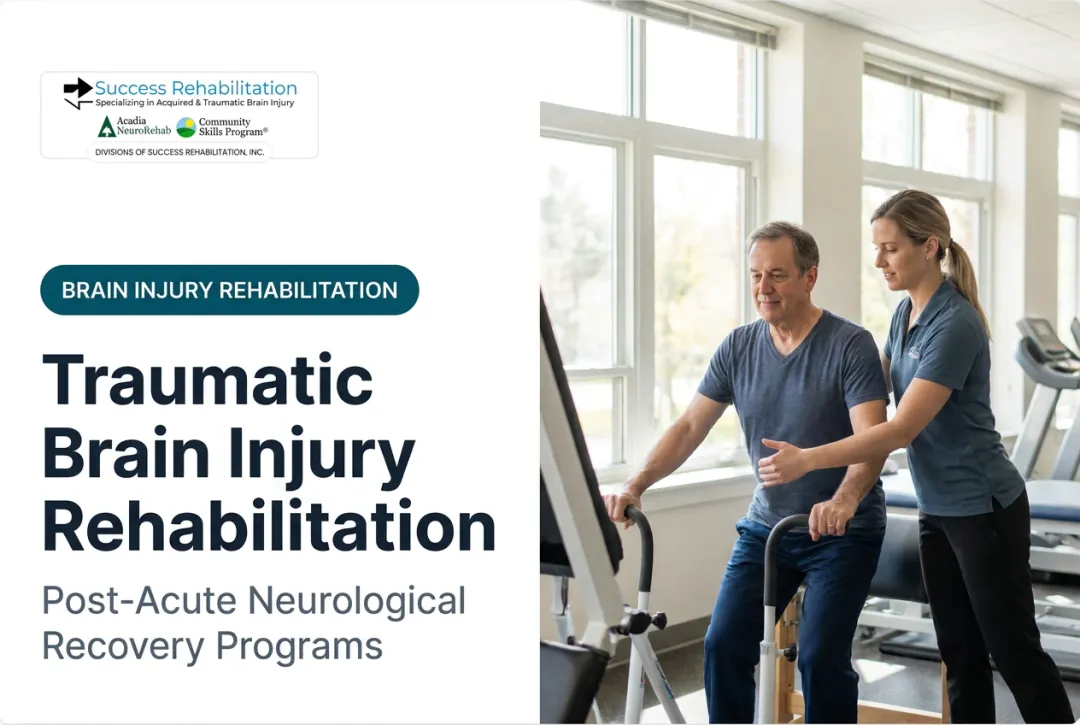
- Balance during tasks and safe transfers
The goal is to connect these abilities to daily occupations.
How does that differ from PT? PT commonly leads gait, strength, balance, and mobility rehabilitation. OT centers on daily function, arm and hand use, cognition, task performance, and environmental adaptation. Many survivors need both.

Emotional, behavioral, and social participation
OT can help identify triggers, build self-regulation routines, manage frustration or impulsivity, and practice social participation. Significant aggression, depression, anxiety, or safety concerns belong with medical or behavioral specialists.
When communication, comprehension, or swallowing is affected, OT coordinates with speech-language pathologists and other clinicians.
Returning to roles and meaningful activities
Return to work, school, parenting, exercise, and hobbies progresses in stages, guided by the survivor's priorities and safety. Employment is a real challenge: a BIAA digest of TBI Model Systems data found only 35% employed at year one, though those are study categories, not individual forecasts.
Therapists analyze the demands of a job, class, or hobby, then recommend pacing, task changes, supervision, accommodations, or vocational support.
What Brain Injury OT Treatment Can Look Like
Goals and progress monitoring
Good goals link measurable change to something personally meaningful: finishing a morning routine, preparing a simple meal, managing appointments, or rejoining a favorite activity. Therapists reassess performance, caregiver observations, safety, and barriers, then adjust the plan. Recovery isn't a fixed sequence.
Functional treatment activities
- Practicing dressing to work on sequencing and balance
- Preparing a simple meal to address planning and safety
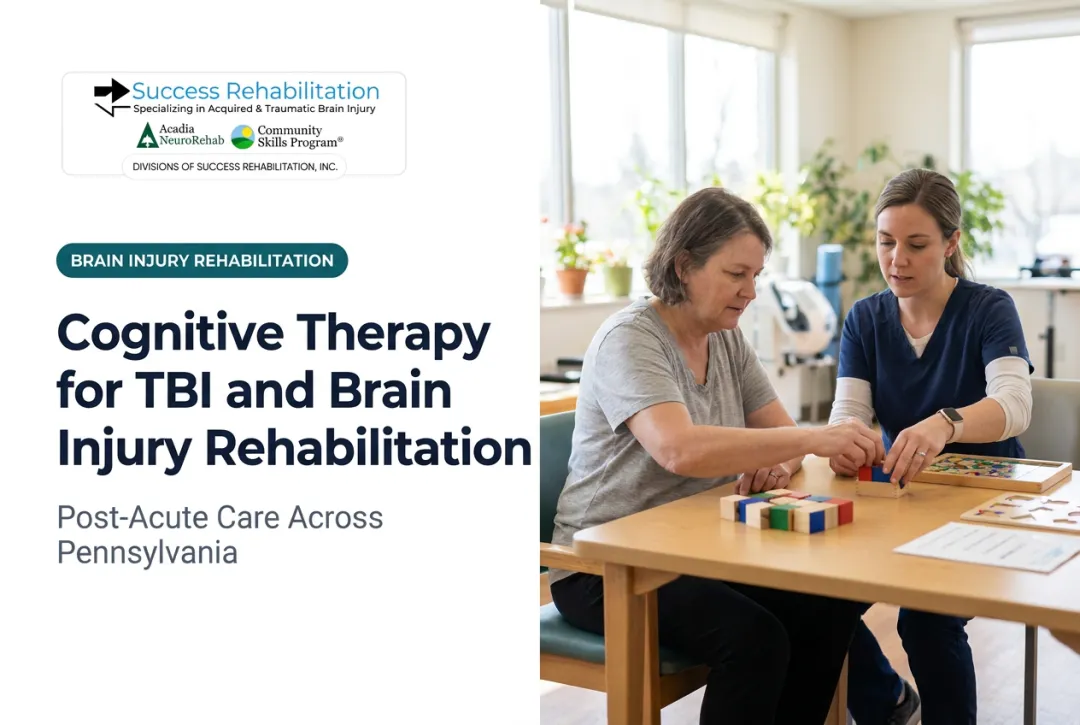
- Using a familiar hobby to build attention, fine-motor skill, and motivation
Activities are graded to current ability and supervised, especially around cooking, tools, walking, transfers, or behavioral symptoms.
Settings and stages
- Residential: structured, supervised care for people who can't safely live alone.
- Outpatient: specialized therapy while living at home. Success Rehabilitation's OT sessions typically run 60 minutes.
- Home-based: reveals real barriers in the actual living space.
- Community-based: addresses transportation, shopping, and social participation.
- Long-term: ongoing support when needed.
The right setting depends on medical stability, supervision needs, goals, support system, and limitations.
Multidisciplinary coordination
OT often works with PT, speech-language pathology, nursing, neuropsychology, behavioral health, vocational rehabilitation, physicians, and caregivers.
Picture one person's morning: PT works on walking safety, OT adapts the dressing and breakfast routine, and SLP supports communication and memory strategies.
Carryover between sessions
Therapists can teach families consistent cues, routines, safety plans, and pacing strategies without turning caregivers into untrained clinicians. Follow the treating team's home-practice instructions. Call a professional promptly for worsening symptoms, falls, unsafe behavior, or new neurological changes.
Choosing Care and Supporting the Recovery Team
The Brain Injury Association of America (BIAA) suggests asking providers about staff, services, outcome data, and accreditation. Use this checklist:
- Experience with brain injury
- Ability to address cognitive and behavioral effects
- Available care settings
- Communication with families and referring professionals
- How progress is measured
- Safety planning
- Insurance or funding requirements, confirmed in writing with the payer
Once a program is in place, caregivers support the team day to day:
- Share pre-injury routines and interests
- Note day-to-day changes
- Use agreed communication strategies
- Keep routines consistent while protecting the survivor's dignity and independence
Success Rehabilitation provides coordinated post-acute concussion and TBI rehabilitation through residential, outpatient, neurocognitive, home-based, and community-based services in Pennsylvania and New Jersey. Individuals, families, and referral professionals can turn to it for a continuum of support. Verify program availability, eligibility, and specific OT services first. For example, its OT is offered at Pennsylvania locations, not in New Jersey.
Conclusion
OT turns brain injury rehabilitation into practical participation. It works toward greater independence in self-care, home life, work, relationships, leisure, and community activities.
Talk through functional concerns with a qualified medical or rehabilitation professional. Ask for an individualized plan that includes the survivor, caregivers, and the care team.
Frequently Asked Questions
What is occupational therapy for traumatic brain injury?
It's rehabilitation focused on daily activities, cognition, physical function, routines, safety, and meaningful roles. The aim is greater independence after TBI.
How can I recover from brain trauma?
Recovery varies by injury and person. It may involve medical care, OT, PT, speech therapy, cognitive rehabilitation, behavioral support, caregiver education, and steady follow-through with the plan.
How can I learn to walk again after a brain injury?
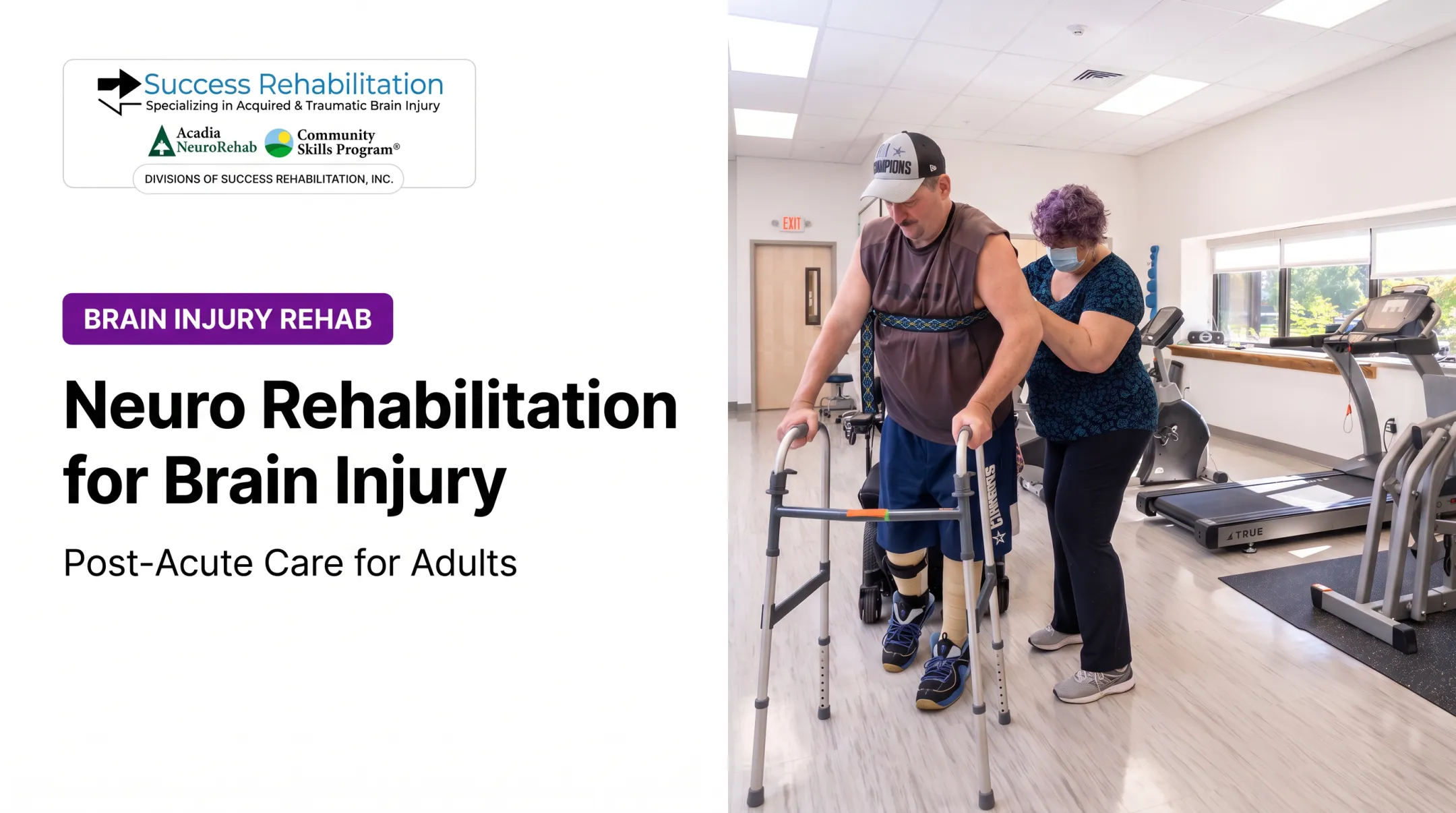
PT commonly leads gait, balance, strength, and mobility training. OT supports transfers, safe routines, adaptive equipment, and carrying mobility skills into daily life.
What are the treatment options for aggression after brain injury?
Options include medical evaluation, trigger identification, structured routines, environmental changes, communication strategies, and behavioral support. Immediate safety concerns need urgent professional help.
How can I effectively communicate with someone who has a brain injury?
Use clear language, one idea at a time, extra processing time, and fewer distractions. Confirm understanding, and ask the rehabilitation team for individualized strategies.
What resources are available for people with TBI?
Start with medical and rehabilitation providers, the Brain Injury Association of America, state brain injury programs, and case managers. Insurance or waiver resources, caregiver organizations, and community services can also help.