Every journey is different. Injury severity, the areas of the brain affected, existing health, home environment, and access to rehabilitation all shape what comes next. One large study of inpatient rehabilitation patients found that by five years, CDC data showed 26% improved, 22% stayed the same, and 30% worsened.

This guide covers long-term effects, daily strategies, rehabilitation options, caregiver support, and building a meaningful life. It does not define recovery as a return to exactly how life was before.
Key Takeaways
- Recovery can continue for years, but it is often uneven and may mean adapting to lasting symptoms.
- Routines, pacing, reminders, and home changes improve safety and participation.
- Fatigue, memory trouble, sensory sensitivity, and mood changes are real effects of injury.
- Reassess care needs as life changes, and seek specialized help when daily life becomes hard to manage.
What Living With TBI Can Look Like Over Time
No two recoveries match. Severity, injury location, treatment history, age, other medical conditions, and social support all play a part.
Physical, Cognitive, Emotional, and Sensory Effects
Long-term effects tend to fall into several areas:
- Physical: headaches, dizziness, fatigue, weakness, balance and coordination problems
- Cognitive: memory changes, slower processing, trouble concentrating, language difficulty
- Emotional: anxiety, depression, irritability, impulsivity
- Sensory: sensitivity to light or noise, changes in hearing, vision, or touch
Many of these are invisible. A survivor can look fine while spending enormous effort on a conversation, a work task, an errand, or personal care. The CDC also documents weakness, thinking, communication, and emotional changes after moderate or severe injury.
Recovery Is Not Always Linear
Progress can be gradual, stall for a while, or get harder when demands rise, sleep changes, stress builds, or age sets in. In a TBIMS study of 1,381 survivors, 25.3% improved in employability or functioning between years 5 and 15.
Not every survivor faces lifelong disability. If symptoms are new or worsening, talk with a qualified clinician rather than assuming they are permanent or unrelated.
Identity, Grief, and Adjustment
Losing abilities, routines, roles, relationships, or career plans is a real loss. Acceptance is an ongoing process, not an order to stop grieving.
Language matters too. Describe a person by their abilities and preferences, not only their deficits or whether they have "overcome" the injury.
Hope and Realistic Expectations
Meaningful gains can continue well past the early stages through rehabilitation, practice, compensatory strategies, and environmental support. Outcomes vary, and no provider can guarantee complete recovery.
Practical Ways to Manage Daily Life With TBI
Daily Routines and Cognitive Supports
Predictability reduces mental load. Build a routine around waking, meals, medications, therapy, rest, and activities that matter to you.
- Calendars, phone alarms, and checklists
- Labeled storage and written instructions
- Visual schedules for multistep tasks
Break complex tasks into smaller steps, avoid multitasking, cut distractions, and allow extra processing time. Clinical guidelines back this up: INCOG 2.0 supports external memory aids, with electronic reminders preferred for severe memory impairment.

Managing Fatigue and Overstimulation
Pace yourself. Stop before exhaustion, schedule rest breaks, avoid over-scheduling, and increase activity gradually. Track triggers such as noise, bright light, crowds, long screen time, poor sleep, and extended conversations.
Work out an activity plan with a healthcare professional, since the right pace differs for each person.
Emotional Regulation and Social Connection
- Learn your early signs of frustration
- Agree on a pause signal with family or coworkers
- State your needs plainly
- Keep supportive relationships going
- Consider counseling or peer support for depression, anxiety, isolation, grief, or lost confidence
Safety and Knowing When to Seek Help
Safety planning covers several areas:
- Fall prevention, including balance programs designed by a physical or occupational therapist
- Medication safety
- Driving and machinery decisions, ideally after a formal driving evaluation
- Home modifications such as grab bars, better lighting, and ramps
- Supervision plans if wandering, impulsivity, aggression, or poor judgment are concerns
Medical safety note: Call 911 or go to an emergency department right away for a worsening headache, seizure, repeated vomiting, weakness or numbness, slurred speech, one pupil larger than the other, significant confusion, restlessness, loss of consciousness, or inability to wake up. These are CDC warning signs after head injury.
Rehabilitation and Support for Brain Injury Survivors
When Specialized Rehabilitation May Help
Ask for a TBI-informed evaluation when:
- Symptoms persist or worsen
- Returning to work or school is difficult
- Independence is declining
- Safety concerns keep recurring
- Caregivers are strained
- General services have stopped helping
Rehabilitation is not a one-time event. Review goals as abilities, environments, and responsibilities change.
What an Interdisciplinary Program May Include
- Physical therapy for movement and balance
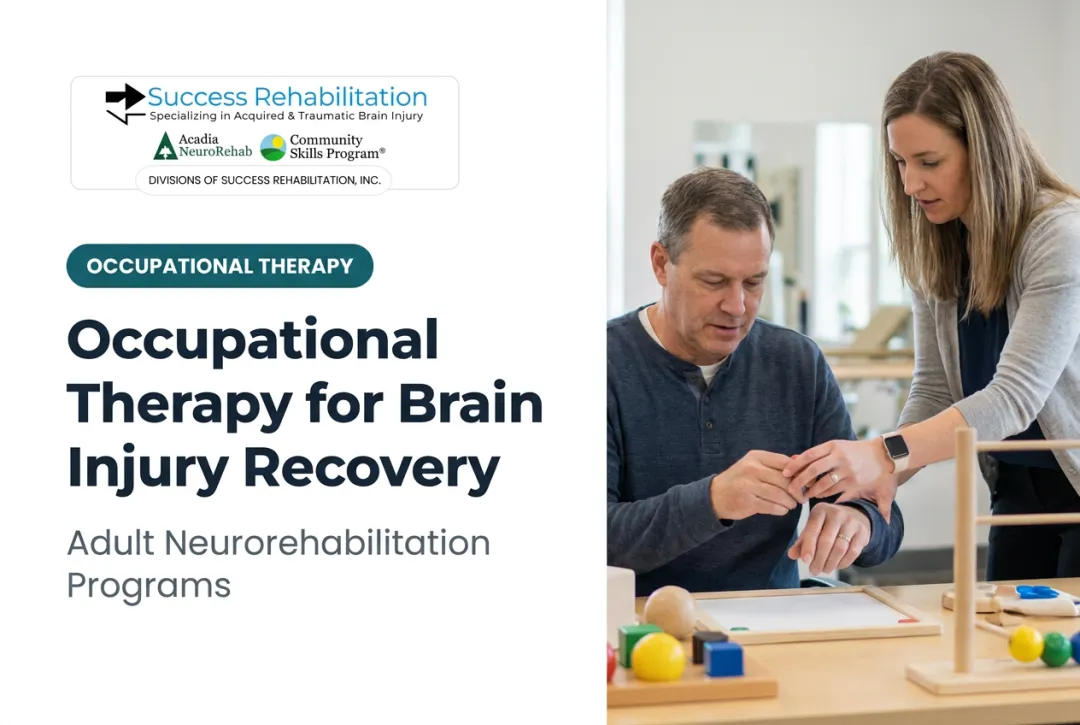
- Occupational therapy for daily activities and routines
- Speech-language therapy for communication and cognition
- Neuropsychological and behavioral support
- Nursing, social work, and vocational rehabilitation
Good programs tie goals to real life: preparing meals, managing appointments, using transportation, communicating at work, and joining community activities.
Choosing the Right Setting
| Setting | Best for |
|---|---|
| Outpatient | Survivors living at home who need structured therapy |
| Home- and community-based | Practicing skills where they are used |
| Residential | Those needing 24-hour support and daily structure |

The most intensive setting is not automatically the best fit. Match it to current goals, supervision needs, caregiver involvement, and accessibility.
Questions to Ask a Rehabilitation Provider
- What is your TBI-specific experience?
- How do you assess and set individualized goals?
- Do you offer family education and behavioral support?
- How is progress measured, and what does discharge planning look like?
- How do you coordinate with my existing clinicians?
- What happens when my needs change?
Also confirm eligibility, insurance or funding requirements, referral paperwork, wait times, and what follows the formal program. In Pennsylvania, funding pathways such as the Head Injury Program (HIP), Community HealthChoices (CHC), and the Office of Vocational Rehabilitation (OVR) have different eligibility rules.
Success Rehabilitation
Success Rehabilitation is a Pennsylvania- and New Jersey-based provider with 35 years of brain injury experience. Its continuum includes:
- Residential care (Pennsylvania only)
- Outpatient and neurocognitive programs
- Home- and community-based services
- Vocational, medical, behavioral, and wellness supports
Care plans are individualized, and no specific outcome is promised.
Supporting Relationships and Caregivers After TBI
Communication and Relationship Changes
Memory problems, slowed processing, fatigue, impulsivity, apathy, and irritability strain partnerships and family roles. What looks like laziness or indifference is often the injury.
- Stay calm and make one request at a time
- Follow up in writing
- Avoid assuming motivation
Caregiver Capacity and Shared Responsibility
Caregiving is heavy. In one sample of 283 caregivers of service members and veterans, a 2018 study found 48.8% reported negative feelings of burden. That is one sample, not a national rate.
Supports that reduce strain include:
- Respite care, support groups, counseling, and case management
- Shared duties among family, professionals, and community services
Asking for more help is not a personal failure.
Keep planning centered on the survivor:
- Involve the survivor in decisions whenever possible
- Respect autonomy and document preferences
- Create a plan for changes in safety, behavior, health, or caregiver availability
Moving Toward Independence and a Meaningful Life
Rebuilding Independence Gradually
Independence can mean finishing tasks with reminders, assistive technology, supervision, or a different pace. Set goals that are specific, measurable, and meaningful, then review them over time.
Work, Education, Transportation, and Community Participation
Work is a major hurdle: the CDC reports 55% of previously employed survivors in its rehabilitation population had no job at five years. Practical supports often include:

- Graded return-to-work or school plans
- Vocational rehabilitation, including job coaching
- Reasonable accommodations under the ADA, such as modified schedules, telework, or leave
- Transportation alternatives such as public transit, ride sharing, or rides from family
- Hobbies, social activities, and volunteering
Coordinate these plans among clinicians, employers, educators, and case managers.
Long-Term Planning
Plan periodic medical and rehabilitation reviews and home-safety reassessments. Address benefits and insurance questions, advance planning, emergency contacts, and care preferences.
A fulfilling life after TBI can include new routines, relationships, roles, and goals. If you need specialized guidance, contact a qualified brain injury rehabilitation provider, including Success Rehabilitation, for information about its Pennsylvania and New Jersey programs.
Frequently Asked Questions
Has anyone ever fully recovered from a traumatic brain injury?
Some people recover fully or nearly fully, while others have lasting effects. In TRACK-TBI, 47.2% of mild-injury patients reported full functional recovery at 12 months, versus 19% with moderate injuries and 12.5% with severe injuries. Adaptation can continue even when symptoms remain.
How do you live with a brain injury?
Keep up medical follow-up and individualized rehabilitation. Build predictable routines, pace your energy, and use external memory aids. Plan for safety, lean on emotional and social support, and ask for help as needs change.
What are the common long-term effects of traumatic brain injury?
Effects can be physical, cognitive, emotional, behavioral, sensory, or communication-related, along with sleep problems and fatigue. Symptoms differ widely among survivors.
How can family members support someone living with TBI?
Offer patience, clear communication, written reminders, and respect for autonomy. Join care planning, use respite, and seek professional support when safety or burnout becomes a concern.
When should a brain injury survivor consider specialized rehabilitation?
Consider it when symptoms persist or worsen, daily activities, work, or school are hard, safety problems recur, or caregivers are strained. Request a TBI-focused evaluation to coordinate services.