Introduction
A brain injury can change attention, memory, processing speed, communication, stamina, movement, mood, and judgment. None of that shows on a résumé, and little of it is visible to a coworker. Yet it can make finding or keeping a job much harder.
The CDC lists concentration and memory problems, slowed thinking, fatigue, dizziness, and light or noise sensitivity among symptoms that can affect work, and some last months or years.
Vocational rehabilitation offers individualized support for returning to a job, retaining one, training for a new role, or building work readiness. This article covers assessment, services, the process, accommodations, and how to find a program.
Key Takeaways
- Vocational rehabilitation is individualized, not generic job placement.
- Strong programs combine brain injury therapy, counseling, job development, and employer coordination.
- Eligibility, funding, and timelines vary by state and payer.
- Progress may mean volunteering, school, graded hours, or a new career.
What Are Vocational Rehabilitation Programs for Brain Injury?
Vocational rehabilitation is a set of coordinated services that help a person prepare for, obtain, return to, or remain in work. It accounts for cognitive, physical, emotional, behavioral, communication, and environmental factors. This article focuses mainly on traumatic brain injury (TBI), though some programs also serve people with other acquired brain injuries. Eligibility and recommendations are always decided individually.
Why standard job placement often falls short
Someone can have a strong degree and years of experience and still struggle with:
- Executive functioning and multitasking
- Fatigue and sensory overload
- Memory and slower information processing
- Emotional regulation
A typical placement service rarely tests for these. A brain-injury-informed program does.
Common models
- Program-based rehabilitation: structured therapy and training in a clinical or day setting
- Supported employment: job coaching and on-site support
- Vocational case coordination: one person links medical, vocational, and employer needs
- Combined models: many providers blend these
A 2009 systematic review found little clear evidence that any one approach is best. A 2023 scoping review of 23 studies recommended integrated, multidisciplinary return-to-work interventions without naming a single superior model.
What the evidence says
Evidence is mixed and limited. Studies differ in quality, design, definitions of work, and follow-up length. Reported employment rates describe groups, not individual prognoses. A 2025 occupational therapy review saw the highest return-to-work rates when therapy included vocational and cognitive rehabilitation, but the intervention samples were small.
What Services Do Brain Injury Vocational Rehabilitation Programs Provide?
Assessment and planning
A thorough vocational assessment looks at the person, the work environment, and the job itself. It covers:
- Work history, interests, and strengths
- Cognitive and physical demands
- Communication, fatigue, and daily routines
- Transportation
- Emotional and behavioral factors
- The person's own employment goals
Plans then set measurable, flexible objectives, such as:
- Work readiness
- Returning to a prior role
- Exploring a new occupation
- Completing training
- Building work tolerance
- Keeping a current job
Cognitive and compensatory strategies
Qualified professionals choose the strategies. Common options include:
- Memory aids and written checklists
- Organization systems
- Pacing and fatigue management
- Problem-solving routines
The INCOG 2.0 guideline recommends external strategies, such as smartphone reminders, as the primary approach for severe memory impairment.
Employment-focused services
- Career exploration and interview support
- Job development and placement
- Work trials and job shadowing
- Job coaching and on-the-job training
- Transportation planning
- Coordination with education or workforce agencies
Who works together
The survivor sits at the center. Family or caregivers, physicians, therapists, vocational counselors, case managers, and sometimes the employer join in. Regular communication connects clinical goals to real job demands.

Public, private, and community providers
State vocational rehabilitation agencies, private providers, workers' compensation programs, insurers, and community organizations differ in who they serve and what they fund. Pennsylvania's OVR and New Jersey's DVRS both offer counseling, placement help, and related services. Referral routes and funding rules vary, so confirm the details for your situation. Commercial plans often lack a standard benefit for TBI job coaching, so verify coverage with your insurer.
What Does the Vocational Rehabilitation Process Look Like?
1. Referral and eligibility
Referrals can come from a physician, discharge planner, therapist, case manager, state agency, workers' compensation professional, family member, or the person directly. Programs may ask for medical, functional, educational, or employment records.
For Pennsylvania OVR, an impairment must be a substantial impediment to employment, and the person must be able to benefit from services. OVR normally decides eligibility within 60 days, with exceptions. Confirm current status, because OVR announced an order of selection in 2025 that waitlisted some categories.
New Jersey's DVRS says a referral is not required for adults.
2. Assessment and goal-setting
The team reviews pre-injury work, current symptoms, transferable skills, job demands, supports, transportation, benefits, and priorities. The person and the team make decisions together. A diagnosis or severity label alone should never assign someone a job.
3. The individualized plan
The team sequences treatment, cognitive strategies, job exploration, training, work simulations, employer communication, and accommodations around the person's readiness.
4. Graded work engagement
Many people start small:
- Volunteering or a work trial
- Reduced hours or modified duties
- Added supervision and scheduled breaks
- Gradually increasing responsibility
The CDC's 2024 return-to-work form supports this kind of individualized approach, including shortened days and extra time for tasks. Adjust the plan if symptoms or performance change.

5. Follow-up and retention
Providers monitor attendance, task completion, fatigue, communication, safety, stress, and employer feedback. Support continues when needs persist or circumstances shift.
Vocational rehabilitation cannot guarantee a return to a specific job or a recovery timeline. Coordinate it with the medical and rehabilitation team.
What Barriers and Workplace Accommodations Should Be Considered?
Less visible barriers
| Barrier | Work demand affected |
|---|---|
| Slowed processing | Fast-paced tasks, verbal instructions |
| Impaired memory | Training, multistep procedures |
| Reduced initiation, impulsivity | Self-directed work, teamwork |
| Fatigue, headaches, dizziness | Full shifts, screens, standing |
| Sensory sensitivity | Noisy or bright workspaces |
| Difficulty task-switching | Multitasking, interruptions |
Practical and social barriers
A 2026 TBI Model Systems study linked independent transportation with better employment outcomes, and rural residence with more consistent unemployment. These are associations, not proof of cause.
Other common hurdles include:
- Housing and caregiver availability
- Employer misunderstanding and stigma
- Disclosure decisions and benefits concerns
- Gaps between short-term rehab and long-term support
When those barriers show up on the job, federal law offers protection. Under the ADA, a person can request a reasonable accommodation in plain language, with no special form. Disability-related information must stay confidential.
Accommodations to explore
- Written instructions and checklists
- A quiet workspace
- Predictable routines
- Extra processing time
- Scheduled breaks
- Reduced multitasking
- Apps, calendars, and other assistive technology
- Regular check-ins, modified hours, or a gradual return
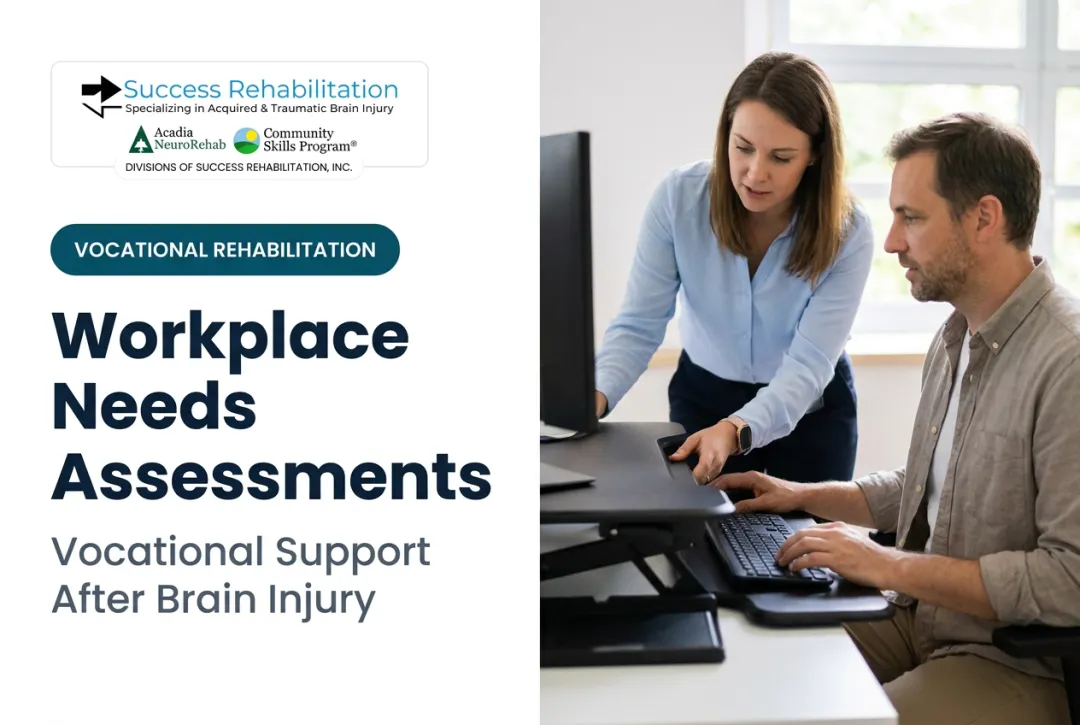
Don't copy a generic list. Work out accommodations with qualified professionals and the employer. Success Rehabilitation's workplace assessments, for example, identify the modifications and support strategies a specific job requires.

How Can You Find and Start the Right Program?
Provider checklist
Look for:
- Experience with both brain injury and vocational rehabilitation
- Multidisciplinary services
- Community or worksite support
- Individualized planning
- Communication with family and case managers
- Outcome tracking
- Clear explanations of funding and follow-up
A CARF brain injury specialty designation is a useful screening signal, but it doesn't prove a particular job-placement service.
Questions for the intake call
- Which injuries and employment goals does the program serve?
- What assessments do you use?
- Who coordinates the plan?
- Is job coaching or employer support available?
- How are transportation and benefits handled?
- What information should I prepare?
Payment pathways
Options may include:
- State vocational rehabilitation agencies
- Workers' compensation
- Private insurance
- Medicaid or waiver programs
- Community organizations
None of these is automatic. Pennsylvania's Head Injury Program and New Jersey's TBI Fund have their own eligibility rules, and neither specifically lists job coaching, so verify current terms. Workers' compensation or insurance authorization is separate from state VR eligibility.
A provider example in Pennsylvania and New Jersey
Success Rehabilitation offers a coordinated continuum of post-acute brain injury services, including community-based and vocational support. Accepted vocational clients work with a Certified Employment Support Professional who helps set goals, build skills, and pursue placement. Job coaching can continue until the client is independent.
Vocational counseling is available at Pennsylvania locations, and one-to-one counseling is offered throughout New Jersey through the Community Skills Program®. To discuss whether these services fit your needs, call 267-990-8690 or 215-538-3488.
Start with a conversation
Survivors, caregivers, discharge planners, and case managers don't need to wait for every symptom to resolve. Begin with a frank talk about goals and barriers. Seek urgent medical care for new or worsening symptoms.
Frequently Asked Questions
What qualifies you for brain injury vocational rehabilitation?
Eligibility depends on functional effects, work or work-readiness goals, documentation, program criteria, and funding rules. Ask a state vocational rehabilitation agency or qualified provider for an individualized screening.
What activities and volunteer opportunities help with brain injury vocational rehabilitation?
Structured, meaningful activities can build stamina, routine, communication, and task completion. MSKTC notes volunteering can offer practice with teamwork and endurance. Match the activity to the person's abilities and plan.
How long does it typically take to recover from a traumatic brain injury?
Recovery varies widely with injury characteristics, symptoms, health, supports, and goals. Vocational progress can continue through gradual rehabilitation even when recovery follows no predictable schedule.
Can vocational rehabilitation help someone return to a previous job after a brain injury?
It may support retention or a graded return through assessment, task modification, accommodations, employer communication, and follow-up. Returning to the same job isn't appropriate or possible for everyone.
What workplace accommodations can help someone with a brain injury?
Examples include written instructions, reduced distractions, scheduled breaks, predictable routines, modified hours, and regular check-ins. Accommodations should be individualized.
How do you start vocational rehabilitation after a brain injury?
Begin with a healthcare professional, case manager, state vocational rehabilitation agency, workers' compensation contact, or specialized provider. Gather medical, employment, functional, and insurance information first.