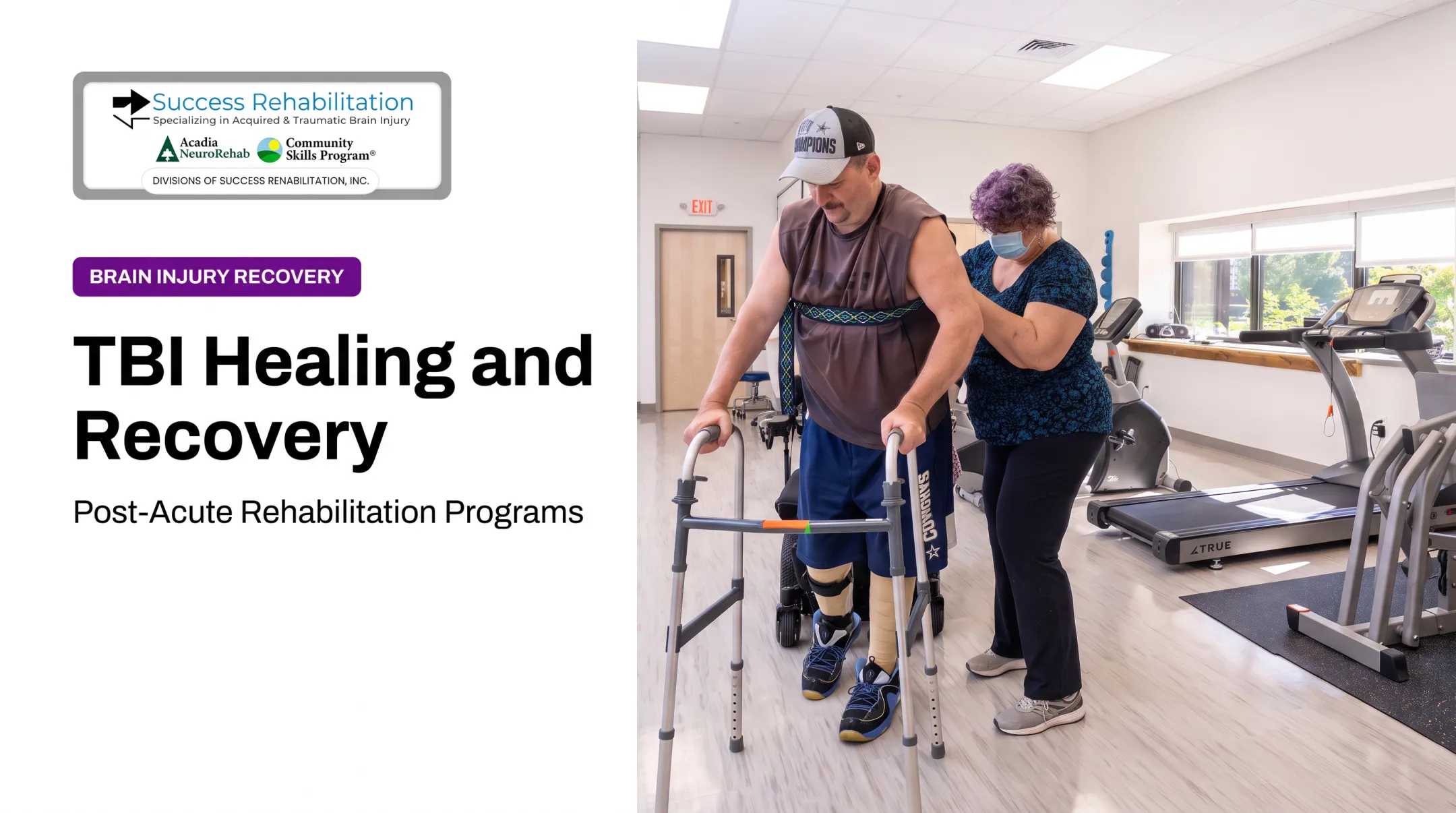
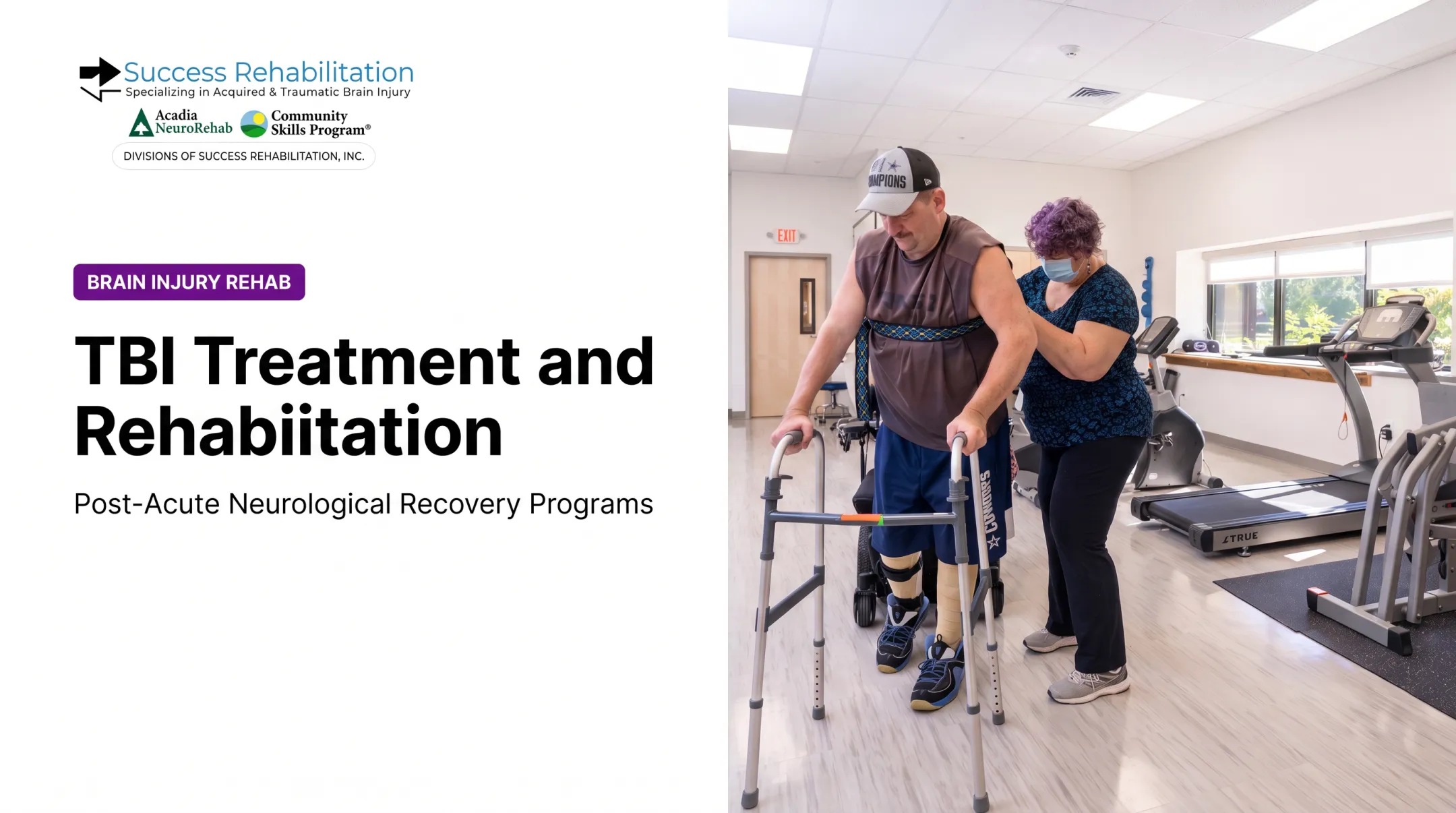
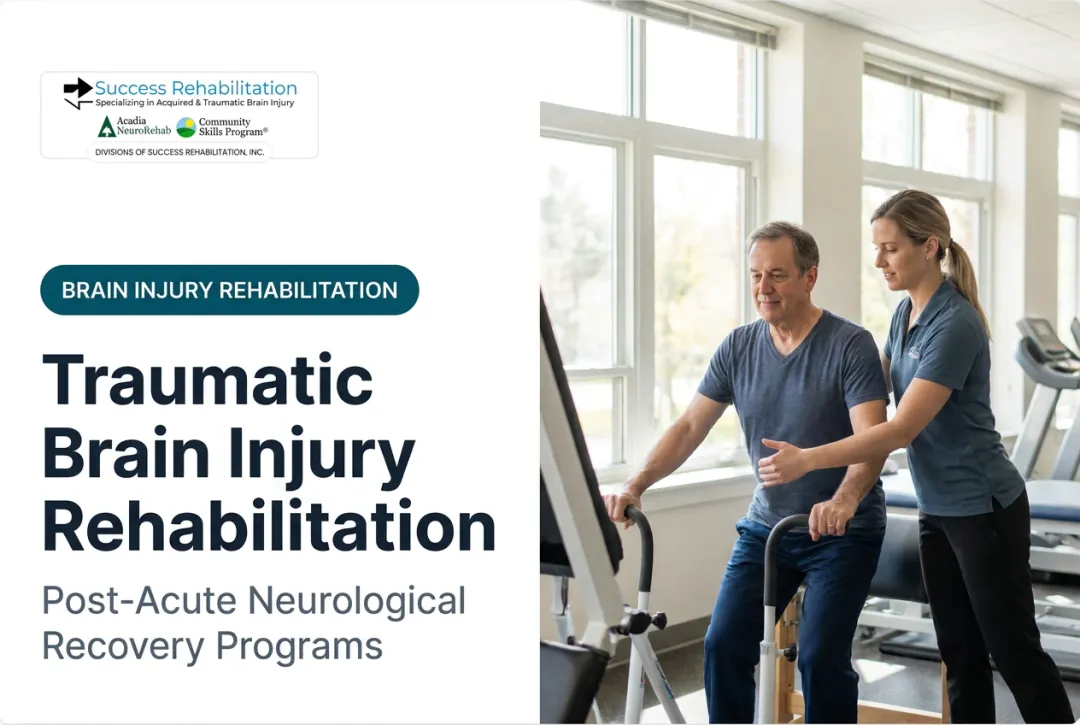
Physical therapy is one part of a coordinated rehabilitation plan. Its aim is safer movement, more independence, and a return to life at home and in the community.
CDC data shows roughly 214,110 TBI-related hospitalizations in 2020, and that count excludes many injuries treated only in emergency departments or not treated at all. This guide covers symptoms, therapy approaches, recovery stages, care settings, caregiver support, and how to choose a provider. Urgent symptoms need immediate medical evaluation, not a therapy appointment.
Key Takeaways
- TBI physical therapy is individualized to injury severity, medical status, and personal goals.
- Therapy targets balance, gait, strength, spasticity, endurance, and dizziness.
- Outcomes improve when PT is paired with occupational, speech, cognitive, medical, and nursing care.
- Daily function measures progress, and caregivers should receive training as part of the plan.
Understanding TBI and the Recovery Process
What a TBI is and how severity is classified
The National Institute of Neurological Disorders and Stroke describes TBI as brain injury caused by an outside force, such as a bump, blow, or jolt to the head or body. The VA/DoD guideline sorts injuries into mild (concussion), moderate, and severe using Glasgow Coma Scale score, loss of consciousness, and post-traumatic amnesia.
| Category | Glasgow Coma Scale | Loss of consciousness |
|---|---|---|
| Mild / concussion | 13-15 | 0-30 minutes |
| Moderate | 9-12 | 30 minutes to 24 hours |
| Severe | Under 9 | Over 24 hours |
These labels guide care but don't predict an individual outcome.
How TBI affects the person
Effects reach well beyond movement:
- Physical and sensory: weakness, poor coordination, dizziness, headaches, light and noise sensitivity
- Cognitive: memory and attention problems, reduced safety awareness
- Emotional and behavioral: irritability, anxiety, mood changes
- Fatigue and sleep disruption
Symptoms can evolve in the days and weeks after injury, even without loss of consciousness.
Warning signs that need emergency care
Call 911 or go to an emergency department for any of these:
- Worsening or persistent headache
- Repeated vomiting
- Seizure
- Increasing confusion or agitation
- Unusual drowsiness or difficulty waking
- New weakness, numbness, or poor coordination
- Slurred speech
Don't wait for a therapy visit.
How Physical Therapy Supports TBI Recovery
Evaluation and individualized goal setting
A neurological PT evaluation looks at strength, range of motion, posture, coordination, balance, gait, transfers, endurance, pain, and fall risk. It also checks whether the person can follow instructions safely. At Success Rehabilitation, the evaluation also covers sitting balance, reaching, lifting, wheelchair mobility, stair navigation, and basic household movement.
Therapists then turn findings into practical goals:
- Rolling and moving safely in bed
- Standing up from a chair
- Walking to the bathroom
- Moving around the home
- Returning to work, school, or community activities
Standardized tests help track change. The neurologic PT guideline recommends measures such as the Berg Balance Scale, 10-Meter Walk Test, and 6-Minute Walk Test. It covers adults with neurologic conditions generally, so test choice should fit the person's ability and goals.
Neuroplasticity and movement retraining
Neuroplasticity is the brain's capacity to reorganize and form new connections. Therapy tries to use it through repetition, meaningful practice, feedback, and task-specific training. That doesn't promise full return of pre-injury abilities.
A 2023 review of adult moderate-to-severe TBI supports repeated mobility practice but rates the evidence as small and low certainty.
Therapists build difficulty gradually by changing:
- Amount of support
- Distance and speed
- Surface
- Distractions
- Cognitive demands

Fatigue and symptoms are monitored throughout.
Functional mobility and equipment
Core work includes:
- Bed mobility and transfers
- Sit-to-stand practice
- Gait training
- Strengthening and range-of-motion work
- Balance activities Therapists also assess and recommend canes, walkers, wheelchairs, or bracing when appropriate.
Team-based rehabilitation and progress monitoring
Physical therapists work with occupational therapists, speech-language pathologists, physicians, nurses, cognitive and behavioral specialists, and caregivers. This matters when mobility problems overlap with memory, mood, swallowing, or safety.
Reassessments, functional measures, caregiver observations, and changes in daily participation tell the team when to adjust the plan.
Common TBI Symptoms Physical Therapy May Address
Balance, dizziness, and vestibular symptoms
Vestibular and balance therapy can address:
- Dizziness and vertigo
- Visual stability
- Posture and spatial orientation
- Fall risk
The VA/DoD guideline gives a weak recommendation for a trial of vestibular rehabilitation for persistent dizziness or imbalance after mild TBI. It also advises checking for vestibular disorders and BPPV (benign paroxysmal positional vertigo) first.
Start exercises only after a clinical evaluation. Copying a generic online list is risky, especially with falls, vision problems, or other neurological symptoms.
Weakness, coordination problems, and gait changes
Strengthening, coordination practice, weight shifting, and gait training support safer walking, transfers, and daily tasks. Therapists adapt for:
- One-sided weakness
- Ataxia (unsteady, uncoordinated movement)
- Slowed movement or altered step patterns
- Low endurance
- Need for a cane, walker, or wheelchair
Spasticity, stiffness, and reduced range of motion
Stiffness or weakness is not the same as spasticity, which is uncontrolled muscle overactivity after disrupted brain signals. Management may include:
- Positioning and stretching
- Supported standing
- Splints or braces
- Medications or injections, coordinated with the medical team
Severe or worsening tone changes need assessment by the rehabilitation team. Therapists should teach caregivers safe positioning and movement.
Pain, fatigue, and exercise intolerance
Therapists address neck and shoulder pain, movement-related headaches, deconditioning, and fatigue through pacing and graded exercise. Symptom monitoring and rest breaks come first. Never push through severe pain, dizziness, or confusion.
Daily function and safety
Therapy goals include fall prevention, safe household mobility, community navigation, and return-to-work or school tasks. Driving, sports, and similar activities wait until a healthcare professional clears them.
Recovery Stages, Care Settings, and Home Support
Acute hospital and early rehabilitation
Early therapy focuses on positioning, joint mobility, preventing complications of immobility, and basic movement. It begins only when the person is medically stable and the medical team approves. Intensity depends on consciousness, neurological status, heart and lung stability, and ability to participate.
One 2024 trial of 65 adults with moderate-to-severe TBI found benefits from progressive mobilization begun within 7 days in the ICU. It was small and single-center, so it isn't a rule for everyone.

Inpatient and residential rehabilitation
Structured programs offer coordinated therapy, nursing oversight, medical monitoring, and caregiver education. They suit people who need more support than outpatient visits provide. Goals include transfers, walking, self-care, safety awareness, and readiness for the next level of care.
Outpatient physical therapy
Outpatient care continues gains after discharge through scheduled visits, home exercises, reassessment, and progressive mobility training. It can also prepare someone for work, school, driving discussions, or community activities.
Home-based and community-based care
Therapy at home or in the community exposes real barriers: stairs, uneven surfaces, bathroom safety, transportation, and caregiver capacity. Caregiver training should cover:
- Transfers and supervision
- Equipment use
- Fatigue management
- Fall prevention
- When to call the rehabilitation team
Transitions and long-term recovery
Recovery isn't always linear. A plateau calls for reassessment of medical factors, fatigue, goals, intensity, equipment, or setting, not a verdict that therapy failed. Moves between hospital, residential, outpatient, and home services go better with clear handoffs, written home plans, and scheduled follow-ups.

Choosing a TBI Rehabilitation Program
Choosing the right program starts with clear questions about experience, credentials, and how care is delivered. Ask any provider about:
- Experience with TBI and neurological rehabilitation
- Credentials of treating professionals
- Range of injury severities served
- How the team handles balance, gait, spasticity, cognition, communication, behavior, and caregiver needs
Credentials differ. Board-certified neurologic clinical specialist status from APTA signals advanced PT specialization, while the Certified Brain Injury Specialist credential recognizes brain injury experience across professions. CARF accreditation describes program scope, not outcomes.
Useful questions before starting:
- How are goals set and measured?
- How is progress communicated?
- Is family training included?
- Which disciplines collaborate?
- What happens if symptoms worsen?
- Can therapy happen at home or in the community when appropriate?
When you compare options, look for a continuum that can meet people at different stages of recovery. Success Rehabilitation is a post-acute provider with 35 years of experience in concussion and TBI care. Its continuum includes residential, outpatient, neurocognitive, home-based, and community-based services across Pennsylvania and New Jersey (residential care is Pennsylvania only).
Its physical therapy program covers mobility, balance, gait, strengthening, and functional rehabilitation, with plans customized to each client's injury, abilities, and potential. Its mission is helping clients reach a realistic, maximum level of independence in the least restrictive community setting, with measurable progress and support for caregivers.

Frequently Asked Questions
How is a traumatic brain injury (TBI) treated?
Treatment starts with medical assessment and stabilization when needed. Individualized rehabilitation follows and may include physical, occupational, speech, cognitive, behavioral, and nursing services.
What are early warning signs of brain damage after a traumatic brain injury?
Seek emergency care for worsening headache, repeated vomiting, seizure, confusion, unusual sleepiness, new weakness, speech changes, or difficulty waking.
What does physical therapy for TBI involve?
It starts with an evaluation and functional goals. Treatment then covers gait and balance training, strengthening, range of motion, endurance, equipment, safety, and caregiver education.
How soon should physical therapy start after a TBI?
There is no universal start day. It depends on medical stability, injury severity, consciousness, and physician guidance. Early therapy may begin in the hospital; outpatient care starts when the person can participate safely.
Can physical therapy help with balance and dizziness after a TBI?
Yes, for appropriately evaluated patients, through balance and vestibular rehabilitation. Severe, new, or worsening dizziness needs medical assessment first.
How long does TBI physical therapy take?
It varies with injury severity, symptoms, goals, progress, and care setting. Plans are reassessed over time rather than tied to a universal timeline.