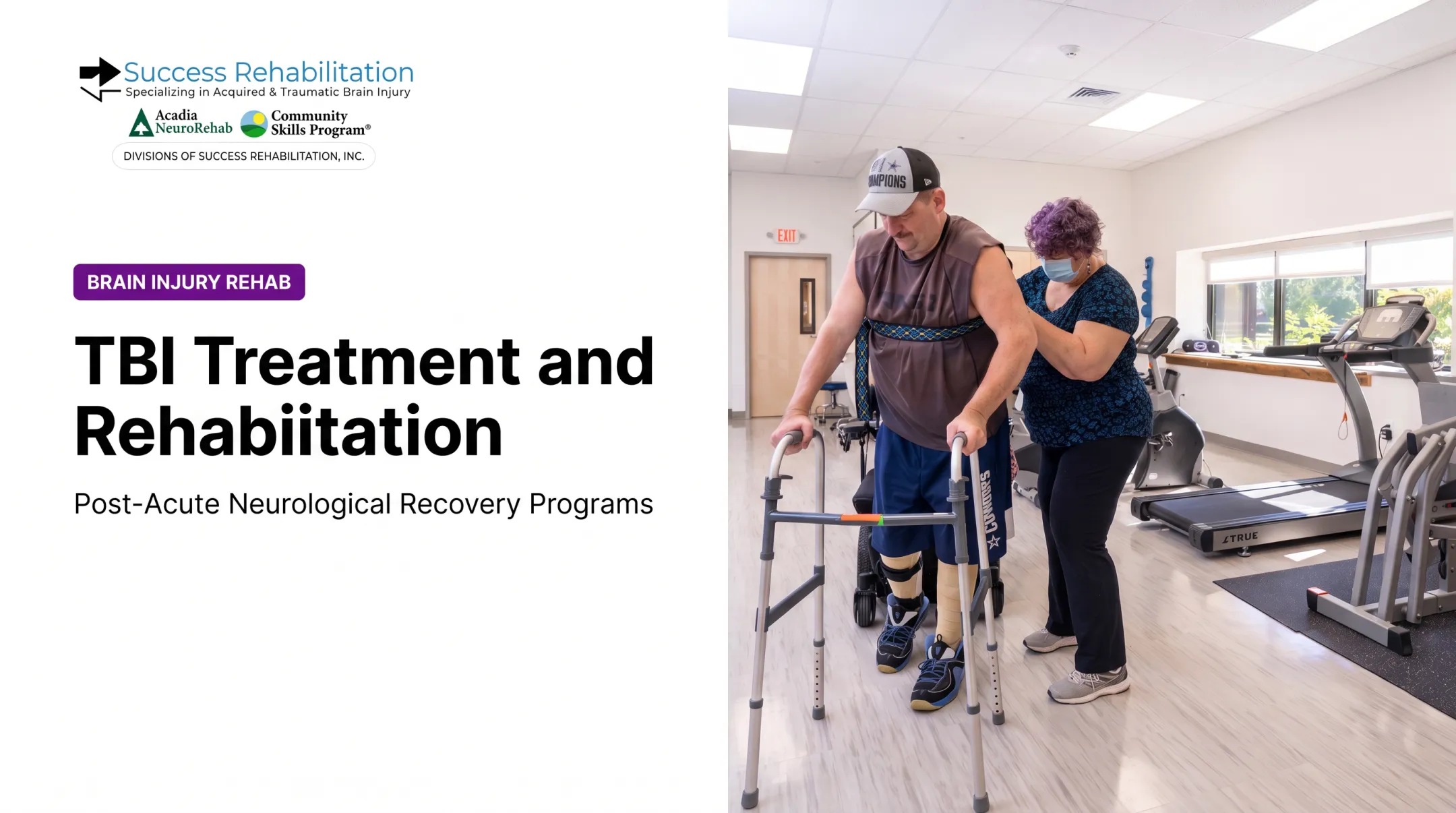
This article focuses on brain trauma and traumatic brain injury (TBI). It clarifies related terms, common symptoms, urgent warning signs, evaluation, treatment, rehabilitation, and practical next steps for families. Medical note: this is general information, not medical advice. Emergency symptoms require immediate medical attention. Call 911 or go to the nearest emergency department.
Key Takeaways
- TBI ranges from concussion to severe injury and can affect physical, cognitive, emotional, sensory, and behavioral function.
- Recovery varies widely, and a normal scan does not rule out post-injury problems.
- Rehabilitation is individualized and draws on several therapy disciplines.
- The right care setting depends on stability, supervision, goals, and caregiver capacity.
What Is a Neuro Injury?
Defining neuro injury and brain trauma
"Neuro injury" is a plain-language term for damage to the nervous system. Here it mainly means brain injury and brain trauma. Traumatic brain injury (TBI) differs from spinal cord or peripheral nerve injuries, though one accident can affect several parts of the nervous system.
Traumatic, acquired, and non-traumatic brain injuries
TBI is caused by an external force: a bump, blow, jolt, blast, or penetrating object. Not every impact causes TBI. The Brain Injury Association of America describes acquired brain injury (ABI) as a wider category that also includes non-traumatic causes such as stroke, oxygen deprivation, infection, tumors, and toxic exposure.
A concussion is generally a mild TBI. "Mild" is an initial classification, not a promise that symptoms will be brief. Loss of consciousness is not required.
Understanding severity and injury patterns
The VA/DoD 2021 guideline classifies severity using several measures:
| Criterion | Mild | Moderate | Severe |
|---|---|---|---|
| Glasgow Coma Scale | 13-15 | 9-12 | Below 9 |
| Loss of consciousness | 0-30 min | 30 min-24 h | Over 24 h |
| Post-traumatic amnesia | 0-1 day | 1-7 days | Over 7 days |
When criteria span categories, the higher category applies. A label does not set the prognosis, since age, prior health, and injury location also matter.
Injuries are closed (the brain moves inside the skull) or penetrating. Damage comes from the initial force and from secondary effects such as bleeding, swelling, and reduced oxygen supply.
Why the impact is individualized
Location, mechanism, age, prior health, support system, treatment timing, and daily responsibilities all shape outcomes. Two people with similar-looking injuries may need different supervision, goals, and timelines. A surgeon returning to the operating room faces different demands than a retiree.
What Causes Brain Trauma and What Symptoms Can Follow?
Common causes and mechanisms
CDC data on 2018 hospitalizations shows the pattern: 51.0% from falls and 23.8% from motor vehicle crashes, followed by assaults (5.9%) and being struck by objects (2.4%). Sports, workplace incidents, and blast or penetrating injuries add to the total. These are shares of hospitalizations, not risks per accident.

Mechanisms include direct impact, abrupt deceleration, rotation, and penetration. Rotational forces can deform the brain and strain its tissue. That is why a serious injury can occur with no visible wound.
Physical, cognitive, and communication symptoms
- Physical: headache, dizziness, balance problems, nausea, vision changes, fatigue, light and sound sensitivity
- Cognitive: slowed processing, memory problems, trouble concentrating, impaired judgment
- Communication: word-finding trouble, difficulty planning or finishing tasks
Emotional, behavioral, sensory, and sleep effects
- Emotional and behavioral: irritability, anxiety, depression, impulsivity, outbursts, reduced motivation, personality changes
- Sensory and sleep: sleep disruption, altered taste or smell, hearing changes, sensory sensitivity
These effects strain relationships, school, employment, and independent living.
Symptoms may be delayed
CDC guidance notes symptoms may appear immediately or hours to days later. Some only surface when someone returns to work, school, driving, or social demands.
Keep a log for the clinician:
- When symptoms occur and what triggers them
- Changes in daily function
- Any worsening pattern
Emergency warning signs
Seek emergency care for:
- A worsening headache that won't go away
- Repeated vomiting
- Seizure
- Weakness, numbness, or poor coordination
- Slurred speech or unusual behavior
- Unequal pupils
- Increasing confusion or agitation
- Loss of consciousness, marked drowsiness, or inability to wake
Follow local emergency guidance. Don't try to judge severity at home.
How Is a Neuro Injury Evaluated and Treated?
Initial clinical evaluation
Clinicians review the injury history and current medications, then examine consciousness, memory, attention, balance, vision, movement, and speech. They also ask what family or coworkers have noticed. The Glasgow Coma Scale, a 15-point initial severity measure, and cognitive screens help, but no single score captures a person's functioning or rehabilitation needs.
Imaging and other testing
- CT answers whether there is bleeding, a fracture, or swelling needing urgent action.
- MRI helps when deficits persist and CT doesn't explain them.
- Neuropsychological testing measures thinking and memory. VA/DoD suggests against routine comprehensive testing in the first 30 days after mild TBI.
- Vestibular and vision assessment addresses persistent dizziness, imbalance, or visual symptoms.

Imaging and symptoms don't always match. NINDS states that normal CT or MRI does not exclude concussion.
Concussion clinics may add computer-based cognitive testing (ImPACT), vestibular-ocular assessment (VOMS), and balance testing (BESS). These support, but never replace, clinical diagnosis.
Medical treatment and specialists
Treatment scales with severity:
- Mild: observation, symptom management, and gradual return to activity
- Moderate to severe: stabilize breathing, oxygenation, and blood pressure; monitor intracranial pressure; manage seizures; perform surgery for hematomas, fractures, or dangerous pressure
Specialist roles differ. Neurologists and neurosurgeons manage the brain and any surgery. Physiatrists direct rehabilitation. Neuropsychologists assess cognition and support coping. The medical team should direct treatment; it should not be self-managed.
What Does Recovery and Rehabilitation Involve?
Goals of rehabilitation
Rehabilitation aims to improve safety, function, participation, and independence. When full resolution isn't possible, it also teaches compensation strategies.
Goals often progress from mobility and self-care to memory strategies, communication, emotional regulation, work, school, and community life.
The multidisciplinary team
| Discipline | Contribution |
|---|---|
| Physical therapy | Strength, walking, balance |
| Occupational therapy | Daily activities, independence |
| Speech-language therapy | Communication, swallowing |
| Neuropsychology and psychology | Memory, mood, behavior |
| Vocational rehabilitation | Work-related difficulties |
Coordination matters. One client might combine balance work, a medication routine, memory aids, and practice navigating the community safely. A 2019 ACRM review of 121 studies supports targeted attention training, compensatory memory strategies, and social-communication treatment.

Choosing the care setting
- Inpatient rehabilitation: hospital-based, physician oversight, 24-hour nursing, typically about 3 hours of therapy a day
- Residential post-acute: transitional living with structured rehabilitation after acute care
- Outpatient or day programs: therapy while living at home
- Home and community-based: support in everyday environments

Medical stability, supervision needs, mobility, cognition, caregiver availability, and goals guide the choice.
Success Rehabilitation, based in Pennsylvania, offers a coordinated continuum of residential, outpatient, neurocognitive, home-based, and community-based brain injury services. Plans are individualized and aimed at greater independence.
Measuring progress
Clinicians set functional goals, document change, reassess barriers, and adjust intensity or setting. Useful outcomes include safer routines, clearer communication, more participation, better self-management, and less caregiver burden.
There is no fixed timeline. Among adults in one moderate-to-severe cohort, TBI Model Systems data show 29% employed at one year, so realistic goal-setting matters.
Supporting caregivers and community reintegration
Caregivers benefit from practical training in areas such as:
- Supervision and daily routines
- Home adaptations and transportation
- Fatigue management
- Behavior changes and communication
Return to driving, work, school, or sports should follow qualified clinical guidance based on function and safety, not elapsed time alone. The CDC cautions against driving when attention, processing speed, or reaction time remain impaired.
When Should Someone Seek Care and What Should Families Ask?
When to seek care
Emergency signs require immediate evaluation. For persistent problems such as ongoing headaches, dizziness, memory trouble, mood changes, poor sleep, or reduced function, schedule timely follow-up. The CDC advises reassessment if symptoms persist beyond 2-3 weeks.
Seek reassessment sooner when symptoms worsen, new neurological changes appear, routine tasks become unsafe, or current support falls short.
Questions for the care team
- What is the diagnosis, and which symptoms should we expect?
- How do medications affect thinking and mood?
- What restrictions apply, and when is follow-up?
- What are the therapy goals and how will progress be measured?
- What criteria will move care between hospital, residential, outpatient, home, or community settings?
- Who do we call if things change?
Preparing for a post-acute referral
Gather these materials before a referral:
- Hospital and imaging records
- Medication lists and therapy evaluations
- Current abilities, behavioral concerns, and communication needs
- Supervision requirements and caregiver availability
- Transportation and insurance or authorization details
- The person's own goals
Discharge planners should match services to clinical and functional need, not the first open bed. Confirm the provider's brain injury experience, therapy access, safety procedures, and how the team will communicate with you. CARF Brain Injury Specialty Program accreditation is one marker worth asking about.
Frequently Asked Questions
What is a neuro injury?
Neuro injury is a broad term for damage to the nervous system. Brain trauma and TBI affect the brain, unlike spinal cord or peripheral nerve injuries.
What should I expect after a traumatic brain injury?
Physical, cognitive, emotional, behavioral, and sensory symptoms can change over time. Care usually includes medical follow-up and individualized rehabilitation.
What are common signs of a traumatic brain injury?
Headache, dizziness, confusion, memory or concentration problems, nausea, balance changes, mood changes, and fatigue. Watch for emergency warning signs too.
How is a brain injury diagnosed?
Clinicians use injury history, neurological and cognitive exams, and symptom review. Imaging or specialized tests are used selectively, and scans don't capture every functional effect.
Can brain injury symptoms appear later?
Yes. Some emerge hours or days later, or during complex activities. See a clinician for persistent, worsening, or concerning changes.
What rehabilitation is available after a brain injury?
Multidisciplinary therapy can be delivered in residential, outpatient, home-based, neurocognitive, or community settings, chosen according to individual needs.