The Department of Defense reports 541,032 worldwide TBI diagnoses since 2000, and 81.8% were mild. That count reflects diagnoses, not the number of living veterans with TBI. Many go unrecognized.
This article covers causes, symptoms, how evaluation works, VA disability basics, and rehabilitation options for veterans and caregivers. It is educational only. It is not a diagnosis or an individual benefits determination.
Key Takeaways
- TBI can follow blasts, impacts, falls, or crashes, even without a visible wound or loss of consciousness.
- Persistent headaches, dizziness, memory trouble, and sleep changes deserve evaluation, not a shrug.
- PTSD, depression, pain, and hearing problems often travel with TBI and complicate diagnosis.
- Many veterans improve with individualized rehabilitation that includes caregivers.
What Is Military TBI and How Does It Happen?
The CDC describes TBI as a disruption in normal brain function caused by a bump, blow, jolt, or penetrating injury. On the VA/DoD severity scale, concussion sits at the mild end, and most people with a TBI do not lose consciousness.
What makes military TBI different?
Military injuries share features with civilian ones. They can also involve:
- Blast overpressure
- Repeated exposures
- Combat stress
- Other injuries at the same time
- Delayed follow-up care
The DoD figures break down like this:
| Severity | Diagnoses | Share |
|---|---|---|
| Mild/concussion | 442,538 | 81.8% |
| Moderate | 66,824 | 12.4% |
| Severe | 5,109 | 0.9% |
| Penetrating | 5,959 | 1.1% |
| Unclassifiable | 20,602 | 3.8% |

Common military causes
- Blast: explosions, artillery, breaching, and weapons backblast.
- Impact and acceleration: vehicle crashes, rollovers, falls, parachuting, hand-to-hand training, and flying incidents.
- Sports and training accidents: often overlooked because they seem routine.
Blast exposure alone does not confirm TBI. DoD's Blast Overpressure Provider Support Tool says low-level blast does not typically cause mild TBI, while high-level exposure can cause acute injury. Context matters.
Document what happened. Write down the date, the type of event, who witnessed it, symptoms, treatment, and how daily function changed. That record helps clinicians and any later benefits review.
Common Symptoms and Long-Term Effects of Military TBI
Symptoms vary by person and injury. They may show up immediately or hours and days later, according to CDC symptom guidance.
Physical and sensory symptoms
- Headaches and dizziness
- Balance or vestibular trouble, nausea, fatigue
- Sensitivity to light or noise, blurred vision, tinnitus
- Altered smell or taste, coordination changes
- Sleep disruption
Cognitive and communication changes
TBI can affect memory, attention, processing speed, planning, word-finding, and judgment. In daily life, that may look like:
- Forgetting appointments or losing track of instructions
- Feeling swamped in a noisy restaurant
- Needing extra time to decide
Emotional and behavioral effects
Irritability, anxiety, depression, impulsivity, apathy, and withdrawal are common. They are symptoms, not character flaws.
TBI and PTSD overlap heavily. A 2012 study of 327,388 OEF/OIF veterans using VHA care found that among those diagnosed with TBI, 73% also had PTSD and 70% had head, back, or neck pain. That is historical care-user data, not a national rate.

Poor sleep, pain, and trauma can each amplify cognitive trouble. Ask for a coordinated assessment rather than assuming one diagnosis explains everything.
Delayed symptoms and warning signs
Problems sometimes surface after you return home, go back to work, or lose the structure of service. Seek evaluation even if the injury happened years ago.
Call 911 or go to an emergency room for:
- Worsening headache or repeated vomiting
- Seizure
- Weakness, numbness, or loss of coordination
- Slurred speech or unusual behavior
- Growing confusion or agitation
- Extreme drowsiness or inability to wake
How Military TBI Is Evaluated and Monitored
Initial screening and clinical history
An evaluation typically reviews:
- Injury mechanism and any loss or alteration of consciousness
- Memory around the event and repeated exposures
- Prior injuries, medications, sleep, and pain
- Hearing, vision, and mental health
Screening tools support clinical judgment but do not replace a full history and exam. The VA/DoD guideline treats mild TBI as a clinical diagnosis. DoD's MACE 2 is useful near the time of injury, but it is not a stand-alone diagnosis.
Neurological, cognitive, and functional assessment
Depending on need, assessment may include:
- Neurological exam and symptom inventories
- Cognitive screening or neuropsychological testing
- Vestibular and balance testing
- Speech-language and occupational therapy evaluations
A normal CT or MRI does not rule out concussion or mild TBI. The VA/DoD guideline finds insufficient support for using imaging or lab tests to diagnose it.
Assessing the whole person
Clinicians should check for treatable contributors that are easy to miss:
- Headaches, dizziness, vision, and hearing
- Sleep, pain, and seizures
- Mood, PTSD symptoms, medication effects, and substance use Family, caregivers, and fellow service members can describe changes the veteran may not notice or remember.
Monitoring recovery
Follow-up should track real-world function, not one test score. That means daily activities, relationships, work or school, driving, and safety. Keep a symptom log for appointments:
- Triggers and sleep patterns
- Medication effects
- Headaches, dizziness, and memory lapses
- Situations that increase confusion or fatigue

VA Disability and Care-Planning Considerations
Understanding service connection
VA looks for three elements to establish service connection:
- A current diagnosed condition
- An in-service injury or event
- A medical link between them
Diagnosis alone does not establish service connection or a rating. An accredited Veterans Service Officer can give case-specific guidance, and VSO help is free.
TBI ratings and functional impairment
Under 38 CFR 4.124a (DC 8045), VA evaluates TBI residuals across facets such as:
- Cognitive symptoms
- Emotional or behavioral symptoms
- Physical symptoms
The highest facet level sets the overall evaluation, and a total level in any facet means 100%. The word "mild" does not decide the outcome. Evidence and functional impairment do.
Separately diagnosed conditions such as migraine, tinnitus, vertigo, or a mental disorder may be evaluated on their own, but the same symptoms cannot support more than one evaluation. No rating is guaranteed.
Benefits are separate from rehabilitation
Care and claims are different processes. Seek treatment even if a claim is pending, denied, or not being pursued.
Rehabilitation and Support for Veterans with TBI
What rehabilitation may address
An individualized plan can target:
- Cognition and communication
- Mobility, balance, and vision
- Self-care, emotional regulation, and sleep
- Pain and a safe return to daily activities
The team often includes:
- Physicians, nurses, and case managers
- Physical, occupational, and speech therapists
- Neuropsychology or behavioral health
- Social workers and vocational staff
Choosing the right level and setting of care
VA's Polytrauma System of Care spans inpatient, residential, outpatient, and community-transition services, plus telerehabilitation. No setting is best for everyone. Placement weighs:
- Medical stability and supervision needs
- Cognitive and behavioral symptoms
- Caregiver capacity and transportation
- Safety, work goals, and funding
- The veteran's preferred independence

Practical strategies for veterans and caregivers
VA caregiver guidance suggests one instruction at a time, written lists or memory notebooks, calendars, regular routines, and rest breaks. The VA Caregiver Support Line is 1-855-260-3274.
Caregivers can help by:
- Getting attention before speaking
- Using clear, simple language
- Allowing extra processing time
- Checking understanding without sounding confrontational
- Skipping arguments over remembered details

Community, vocational, and relationship reintegration
Return to household duties, driving, school, and work should be gradual. Therapists help set safety limits and reasonable supports.
Aim for meaningful participation and measurable functional progress, not just symptom elimination. Revisit goals as needs change.
A specialized rehabilitation resource
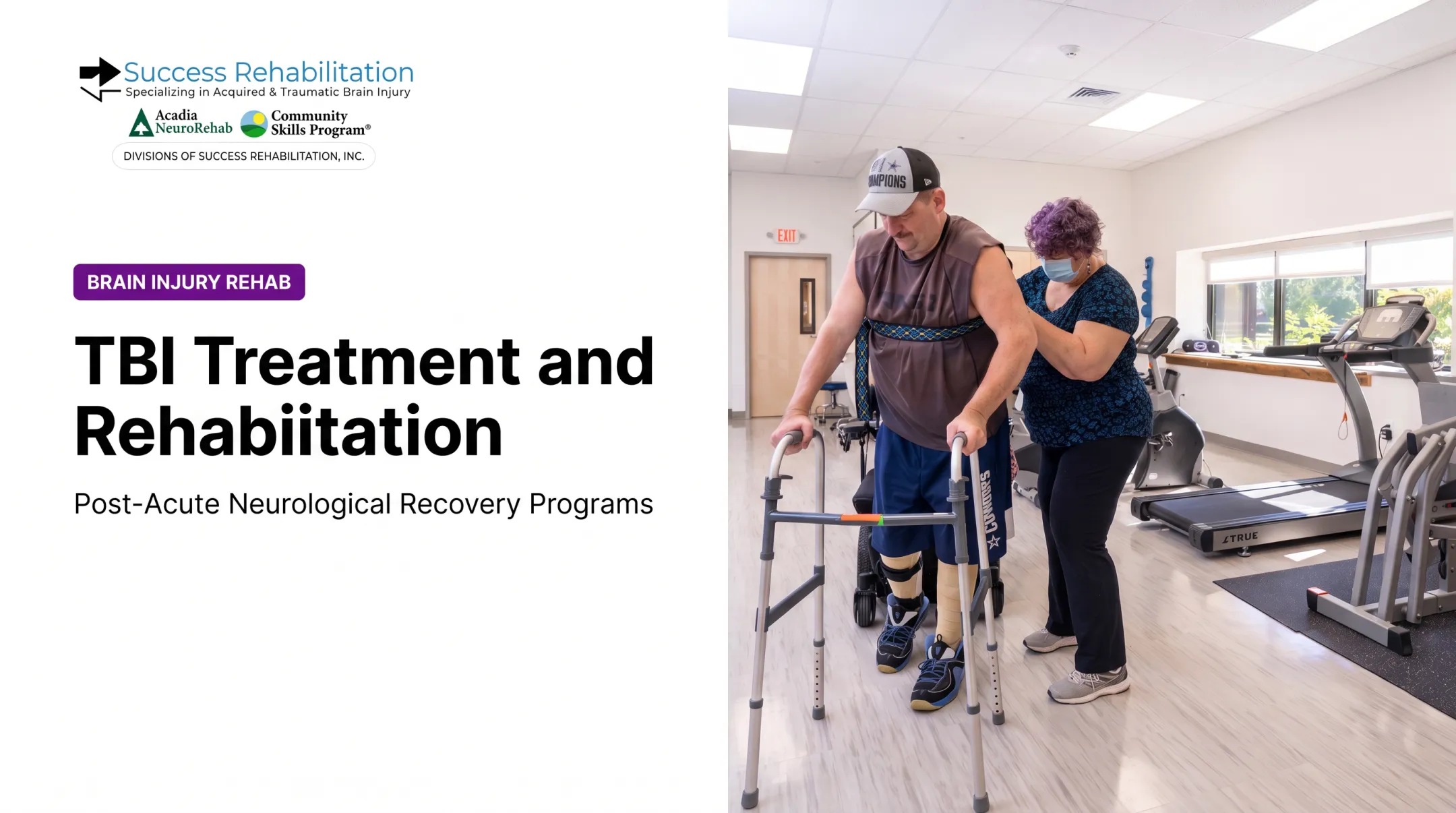
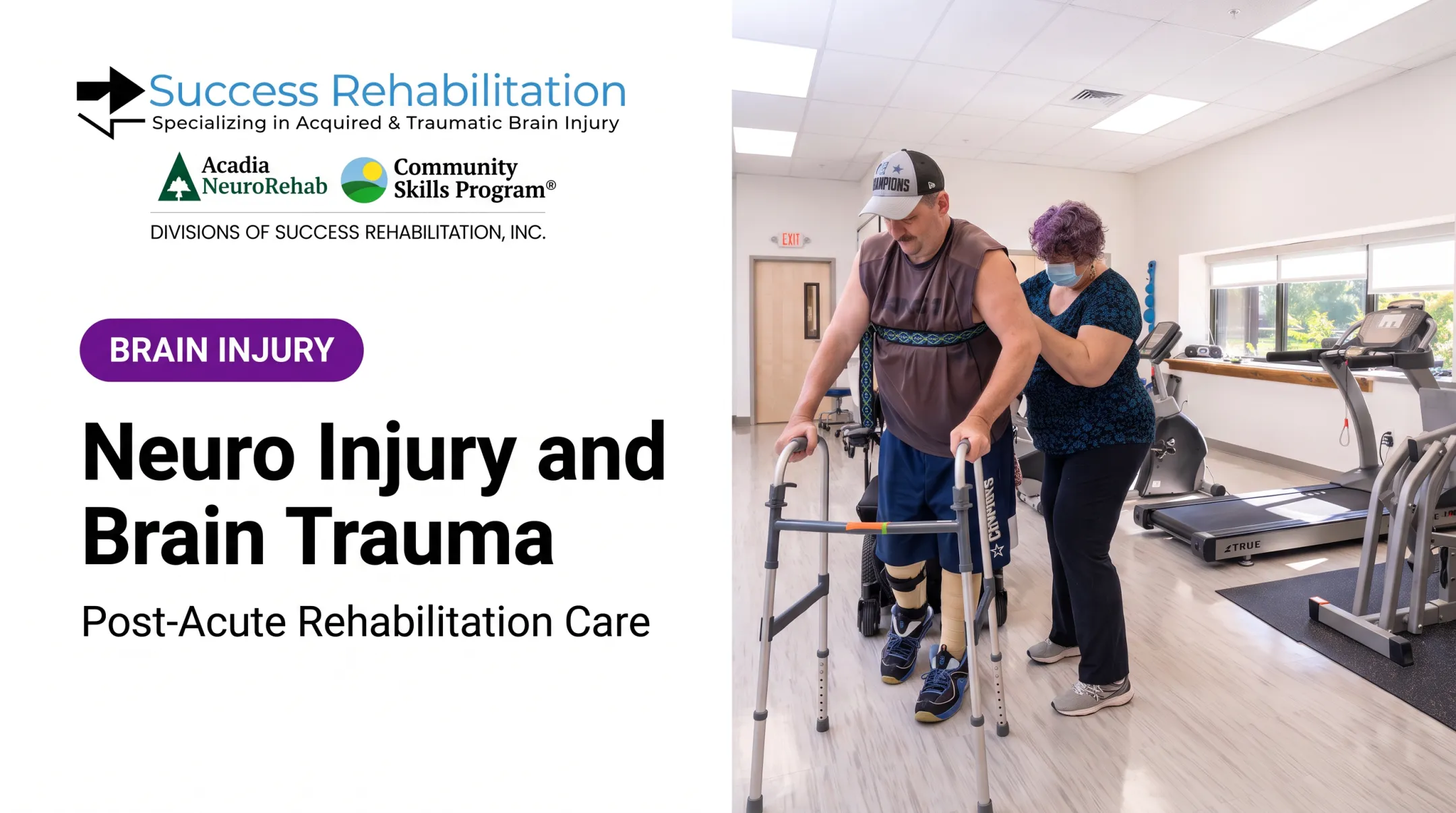
Success Rehabilitation runs a Veteran Services Program for veterans and first responders with a primary diagnosis of TBI or concussion. Its post-acute continuum includes residential, outpatient, neurocognitive, home-based, community-based, and vocational services in Pennsylvania, with home- and community-based services in New Jersey.
Care is coordinated across a multidisciplinary team, with caregiver support and a goal of independence in the least restrictive community environment.
Eligibility requires a primary TBI or concussion diagnosis, assessment-team approval, and approved funding. The program is not affiliated with the VA. To see whether it fits your needs, call 215-538-3488.
Frequently Asked Questions
Is TBI a VA disability?
TBI or its lasting residuals may qualify for compensation when service connection and functional evidence are established. Check current VA guidance or an accredited representative for your situation.
Can you get 100% VA disability for TBI?
It is possible in severe cases, such as a total level in any facet. No rating is automatic. VA decides based on the full evidence and criteria.
How does the military test for TBI?
Evaluation combines injury history, symptom screening, neurological exam, and cognitive and functional assessment, with more testing when indicated. No single test identifies every mild TBI.
Can the brain heal from traumatic brain injury?
Recovery varies with severity, location, repeated injury, sleep, mental health, and support. Rehabilitation can help the brain form new connections and help the person build strategies for better function.
What are the physical effects of traumatic brain injury?
Possible effects include headaches, dizziness, balance problems, fatigue, vision or hearing changes, nausea, coordination trouble, seizures, and sleep disruption. Symptoms differ, so get a professional evaluation.
How can I communicate effectively with someone who has a brain injury?
Get their attention first, use simple language, allow extra time, reduce distractions, and offer written reminders. Confirm understanding respectfully so their dignity stays intact.