Introduction
Forgetting appointments. Losing the thread of a work task. Needing twice as long to read an email. For some people, these problems linger long after a concussion, traumatic brain injury (TBI), or other acquired brain injury.
A 2023 meta-analysis found that 18% to 31% of adults still had postconcussion symptoms 3 to 6 months after a mild TBI, depending on the definition used. That range includes physical and emotional symptoms, not cognition alone. Memory, attention, planning, and problem-solving problems can still disrupt work, relationships, and daily routines.
Computerized cognitive retraining is one tool in a broader rehabilitation plan. This article covers how it works, who may benefit, what the research shows, and why professional guidance matters.
Key Takeaways
- Computerized retraining uses structured, adaptive exercises for specific skills, not casual brain games.
- The best programs tie digital practice to real goals, such as following a work procedure.
- Research is mixed, and better scores on a computer task don't guarantee better daily function.
- It works best as one part of a coordinated brain injury rehabilitation plan.
What Is Computerized Cognitive Retraining?
The clinical meaning
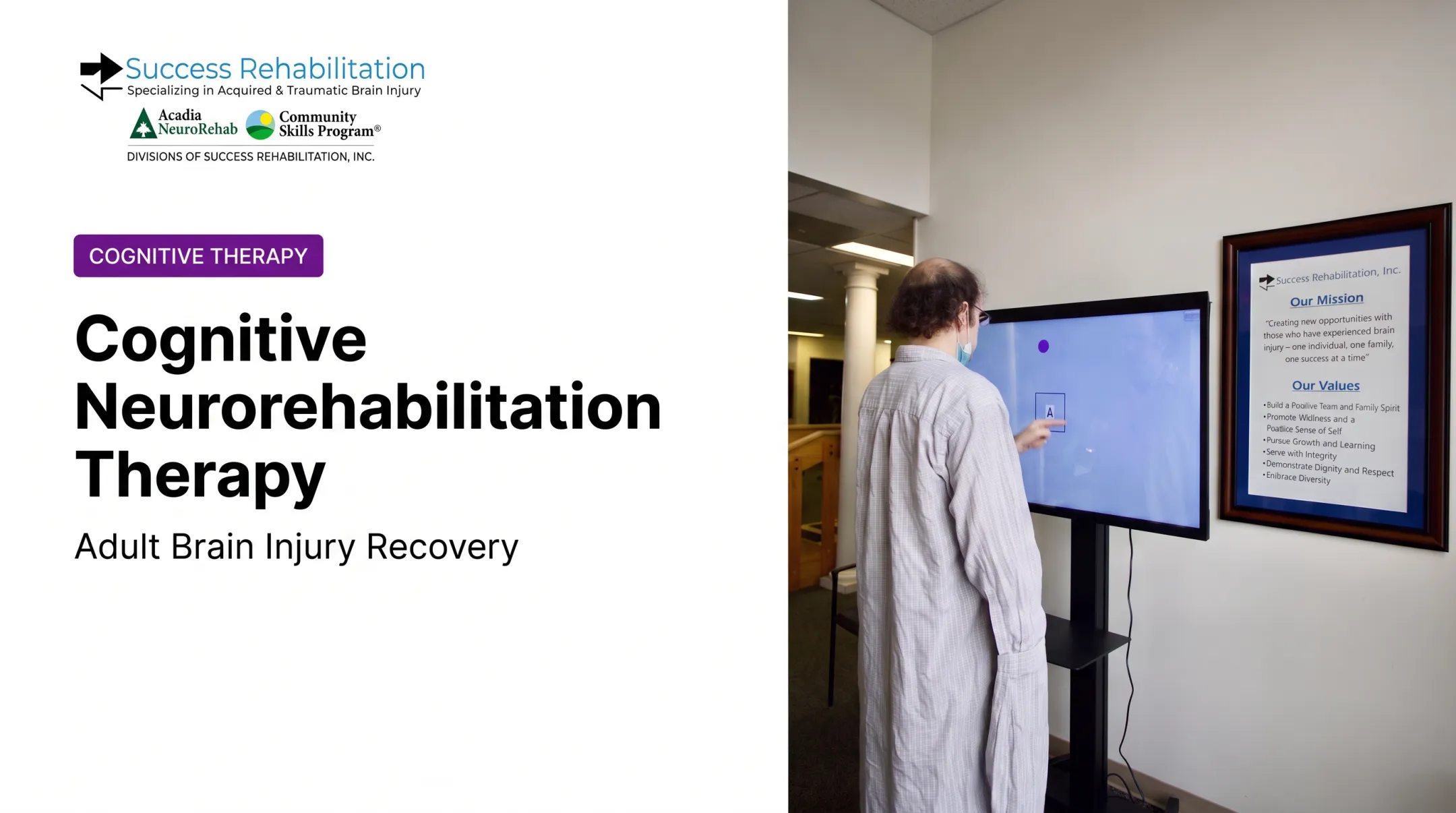
Computerized cognitive retraining uses software exercises to practice selected mental skills under a structured plan. You will also see the terms cognitive remediation and computerized cognitive training. The NIH/NLM definition of cognitive training describes guided practice on tasks targeting memory, attention, and problem-solving.
Clinician-guided retraining differs from unstructured brain games in several ways:
- Starts with an assessment
- Sets individualized goals
- Progresses difficulty with performance
- Provides clear feedback
- Documents the clinical response
Skills programs may target
Common targets include sustained and divided attention, working memory, processing speed, cognitive flexibility, inhibition, planning, and problem-solving. Each connects to daily life:
- Attention: filtering out a noisy kitchen while following a recipe
- Memory: holding onto verbal instructions
- Planning: organizing a weekly schedule
- Sequencing: finishing a task in the right order
Retraining versus cognitive rehabilitation
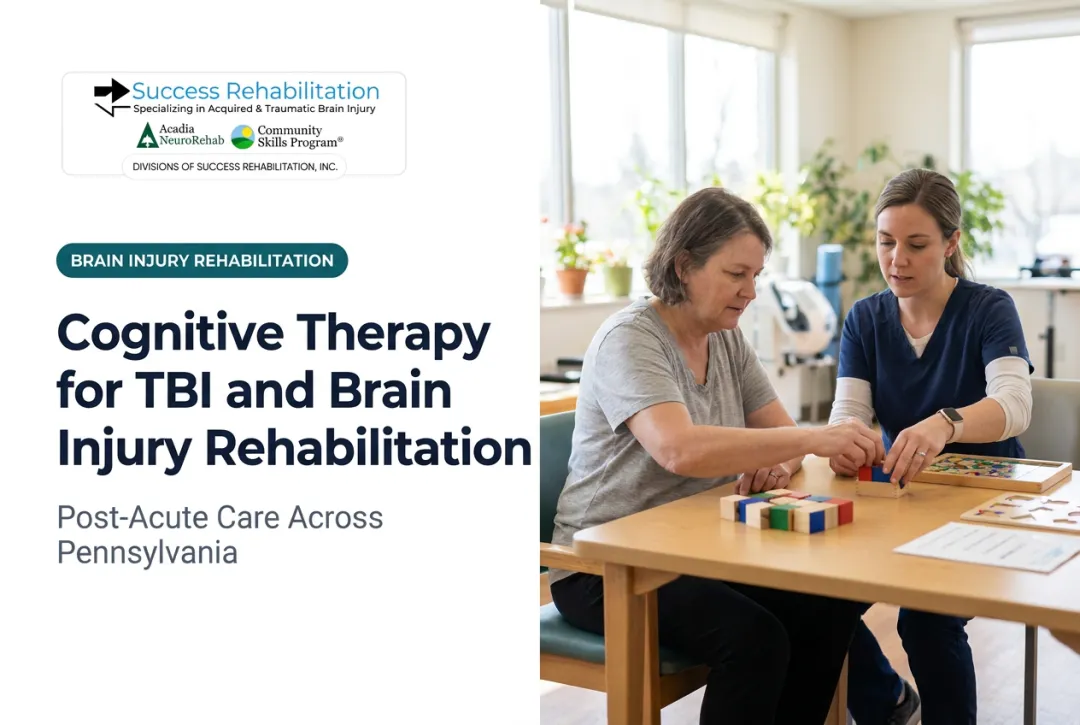
Retraining emphasizes repeated practice of cognitive processes. Cognitive rehabilitation is broader. It adds compensatory strategies, environmental changes, routines, caregiver training, and real-world skills. A team often combines digital exercises with therapist-led practice and assistive tools rather than relying on software alone.
What it cannot promise
Computerized retraining is not a diagnostic test or a guaranteed cure. It is not proof that digital training prevents dementia. In 2016, the FTC settled with Lumosity over unsupported claims, including claims about brain injury. Judge a program by the person's diagnosis, goals, supervision, and functional outcomes, not by marketing language.
How Does Computerized Cognitive Retraining Work?
From evaluation to individualized goals
A qualified professional first reviews injury history, symptoms, medications, fatigue, sleep, mood, sensory needs, and technology access. The person and family should contribute priorities and observations as well.
Those findings become specific, measurable goals. "Make my brain sharper" is not a goal. "Follow a five-step work procedure without prompts" is.
Adaptive exercises and progression
Many programs adjust difficulty, timing, distractions, or the amount of information based on performance. Adaptive features vary by platform, so ask what a specific program actually does.
Tasks should challenge without overwhelming. Headache, dizziness, fatigue, or frustration signal that the load is too high.
What a session may include
A representative session might look like this:
- Review the goal for the day
- Complete targeted exercises
- Take rest breaks
- Review performance
- Discuss how the skill applies outside the software
Length, frequency, and supervision should come from the treating team. In the BRAVE study, participants trained an hour a day, five days a week, for 13 weeks with weekly coaching calls. That was a research protocol, not a template.
Transferring practice to everyday life
Therapists should link computer practice to real activities:
- Managing appointments
- Remembering medication instructions
- Navigating a familiar route
- Preparing for work
Practice those skills in varied settings. Then test whether gains hold up under distraction, time pressure, or fatigue.
Monitoring and adjusting
Clinicians track task performance, symptom tolerance, adherence, caregiver observations, and functional progress. They modify or pause training when it isn't helping. A plateau or worsening symptoms should trigger reassessment, not simply harder tasks.

What Do the Evidence and Limitations Show?
What research can and cannot establish
Evidence from ADHD, dementia, or schizophrenia isn't interchangeable with brain injury evidence. In TBI, a 2024 systematic review of 6 randomized trials with 270 adults reported improvements across cognitive domains but called for larger samples and long-term follow-up.
Outcomes also differ by how they are measured: computer tasks, standardized tests, self-reports, caregiver reports, and real-world performance can tell different stories.
Benefits by domain
The clearest trial data come from BRAVE, a chronic mild TBI study of 83 adults averaging 7.2 years post-injury. Coached, adaptive training beat computer games on a cognitive composite by 6.9 points, and the gain held at 3 months. But observed daily-function and symptom measures showed no significant difference.

Domain-level findings are uneven:
- Attention: one military trial found improvement in every group, not a computer-specific edge
- Working memory: BRAVE's pattern was not generally positive
- Processing speed: no isolated treatment effect established
- Executive function: a favorable exploratory pattern, with stronger support for metacognitive strategy training
Effects likely vary by injury severity, time since injury, age, co-occurring conditions, and adherence.
Transfer and durability
Near-transfer means improving on a similar test. Far-transfer means better independence, work performance, or community participation. Far-transfer is the harder bar.
A Cochrane review of 9 studies and 790 participants found insufficient good-quality evidence for improved work, independence, or quality of life. That review covered broader cognitive rehabilitation, not computer-only programs.
Limitations and barriers
- Program designs, populations, and control groups vary widely
- Follow-up is short, and practice effects can inflate scores
- Equipment, WiFi, and digital confidence are real barriers
- Vision or motor impairments may need accommodations
- Fatigue and frustration make participation without support difficult
- Privacy protections need confirming for any named program
Interpreting progress responsibly
Judge success by personally meaningful goals and several sources of information, not one score. A modest gain still matters if it helps someone complete a daily task more safely or independently. No one can promise a guaranteed outcome.
Who May Benefit and How Does It Fit Into Brain Injury Rehabilitation?
Potential candidates
People with persistent cognitive symptoms after concussion, TBI, or another acquired brain injury may be considered, particularly when their goals match the skills being trained.
The VA/DoD guideline weakly recommends a short, clinician-directed trial for memory, attention, or executive problems that persist after sleep, pain, mood, and headache are managed. It weakly recommends against self-administered computer training.
Suitability also depends on factors such as:
- Medical stability and cognitive profile
- Communication, vision, and hearing
- Fatigue, mood, and motivation
- Support available for using the technology
The multidisciplinary team
Retraining works best alongside other care:
- An occupational therapist might link an attention exercise to meal preparation
- A speech-language pathologist might connect memory practice with following verbal instructions
- Physical therapy, behavioral health, and medical management address co-occurring symptoms
- Vocational specialists help with workplace accommodations
- Caregiver education keeps practice going at home

Coordinated support at Success Rehabilitation
Success Rehabilitation provides post-acute brain injury rehabilitation across residential, outpatient, neurocognitive, home-based, and community-based settings. Care plans are individualized, with support for caregivers and case managers.
Services include Cognitive Rehabilitation Therapy, delivered in person or virtually, and a Cognitive Technology Service. Ask the admissions team which options fit a given situation.
What to Expect From a Clinician-Guided Program
Questions to ask before starting
- Who conducts the assessment?
- Which cognitive and functional goals will be addressed?
- How will progress be measured?
- What supervision is provided?
- How does it fit with existing therapies?
- What are the rest-break, accessibility, and equipment arrangements?
- How is data privacy handled?
- What do costs, insurance, and funding look like?
- What happens if symptoms worsen?
A typical experience
Most clinician-guided programs move through these phases:
- Evaluation and baseline assessment
- Goal setting with the care team
- Supervised practice sessions
- Review of results
- Real-world application
- Periodic adjustment

There is no universal schedule. Progress is often gradual. Consistency, rest, emotional support, and practice outside the software all shape how well you participate.
When to seek reassessment
Contact the treating professional if training repeatedly worsens headaches, dizziness, visual symptoms, confusion, fatigue, or frustration.
New, severe, or rapidly worsening symptoms need urgent care instead. The CDC's red flags include:
- A headache that keeps worsening
- Repeated vomiting
- Weakness or numbness
- Seizures
- Slurred speech
- Unequal pupils
- Confusion or agitation
Call 911 or go to an emergency department.
Frequently Asked Questions
What is one of the first signs of cognitive decline?
Early signs vary and may include trouble with recent memory, attention, language, or familiar tasks. Repeated questions or getting lost in familiar places are more concerning than occasional forgetfulness. Seek a professional evaluation rather than self-diagnosing.
Can computerized cognitive retraining reduce dementia risk?
Current evidence doesn't establish it as a guaranteed way to prevent dementia. One large trial in adults 65 and older linked speed training to lower dementia risk, but it did not study brain injury. Talk with a healthcare professional.
What is computerized cognitive retraining?
It is structured, often adaptive digital practice for selected cognitive skills. It works best when individualized, monitored by a clinician, and combined with broader rehabilitation and real-world strategies.