Introduction
Traumatic brain injury (TBI) rehabilitation is an individualized process that helps a person regain skills, build workarounds, and take part in daily life more safely once the acute medical phase ends. Plans vary by injury severity, goals, and the mix of therapies each person needs.
Survivors and families face a long list of worries: balance, memory, communication, mood, fatigue, independence, work, and relationships. The CDC reports roughly 214,110 TBI-related hospitalizations in 2020 alone.
This guide defines TBI rehabilitation, walks through the main therapies and care settings, explains timelines, offers practical advice for families, and lists questions to ask providers. One caution first: sudden or worsening symptoms need emergency care, not routine rehab advice.
Key Takeaways
- Goals should reflect the person's symptoms, safety needs, environment, and life priorities.
- Physical, occupational, speech, cognitive, behavioral, vision, and vestibular therapies often work together.
- Care can happen in inpatient, residential, outpatient, home, or community settings, and it shifts over time.
- Family education, reassessment, and transition planning are core parts of recovery.
What Is Traumatic Brain Injury Rehabilitation?
Definition and purpose
TBI rehabilitation is structured post-acute care for the physical, cognitive, communication, emotional, behavioral, and daily-living problems a brain injury causes.
It differs from emergency and acute treatment. Acute care stabilizes the injury and any medical complications. Rehabilitation starts once those needs are under control and can continue across several levels of care. There is no mandatory sequence across those levels.
Who may benefit
People with mild, moderate, or severe TBI may need rehabilitation. Severity categories describe the acute injury, not a person's recovery. On the Glasgow Coma Scale, mild is 13-15, moderate is 9-12, and severe is 8 or below.
A mild injury can still cause lasting problems. In one TRACK-TBI cohort, more than half of participants, including those with mild TBI, still reported three or more symptoms worse than before injury at 12 months.
Typical reasons to seek rehab:
- Persistent post-concussion symptoms
- Trouble walking or balancing
- Memory or executive-function problems
- Changes in speech or communication
- Reduced independence at home or work
A good initial evaluation looks at:
- Movement and balance
- Cognition and communication
- Swallowing, when relevant
- Mood and behavior
- Daily activities and home safety
- Caregiver capacity
- Work, school, and community goals
Which Therapies Are Used in TBI Rehabilitation?
Physical and occupational therapy
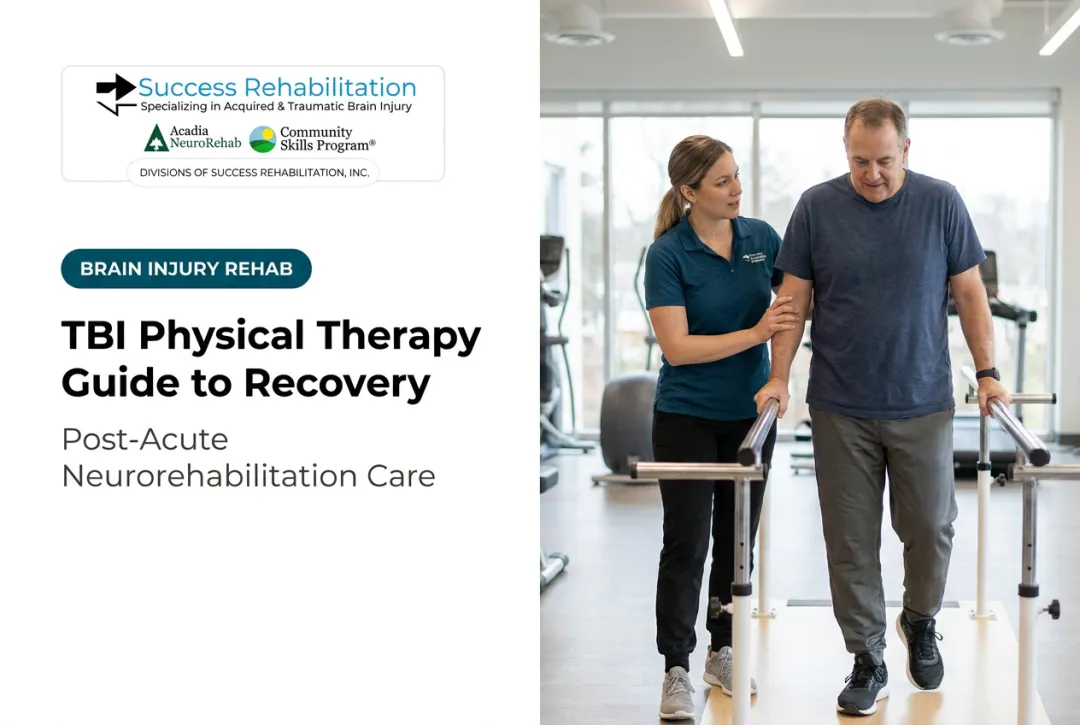
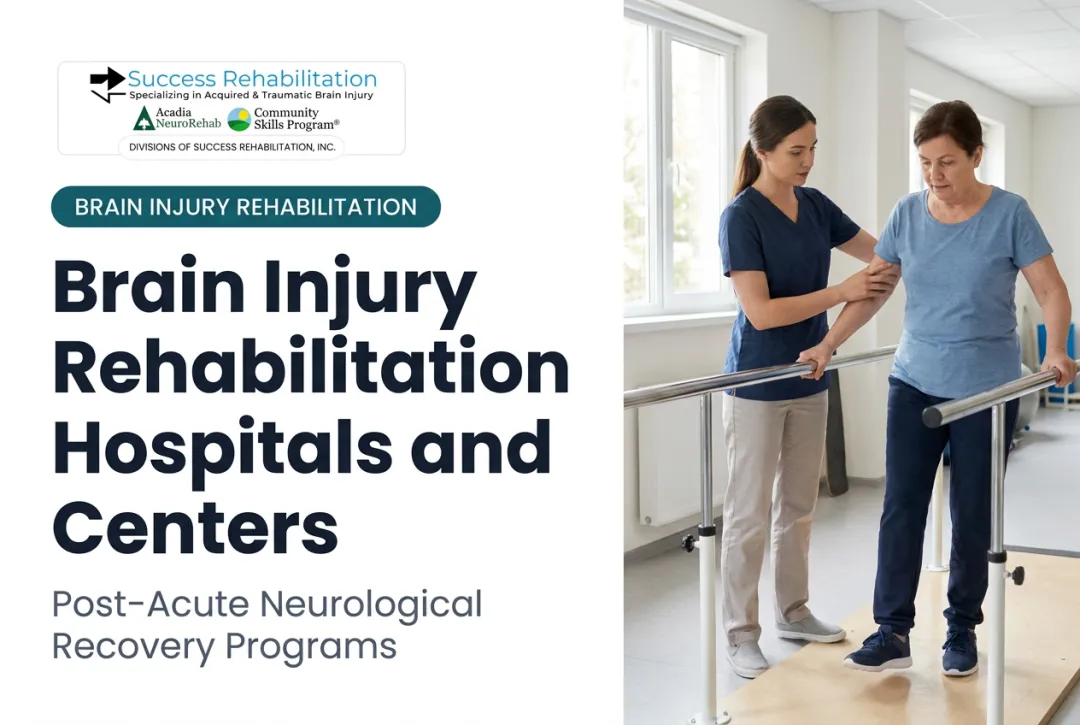
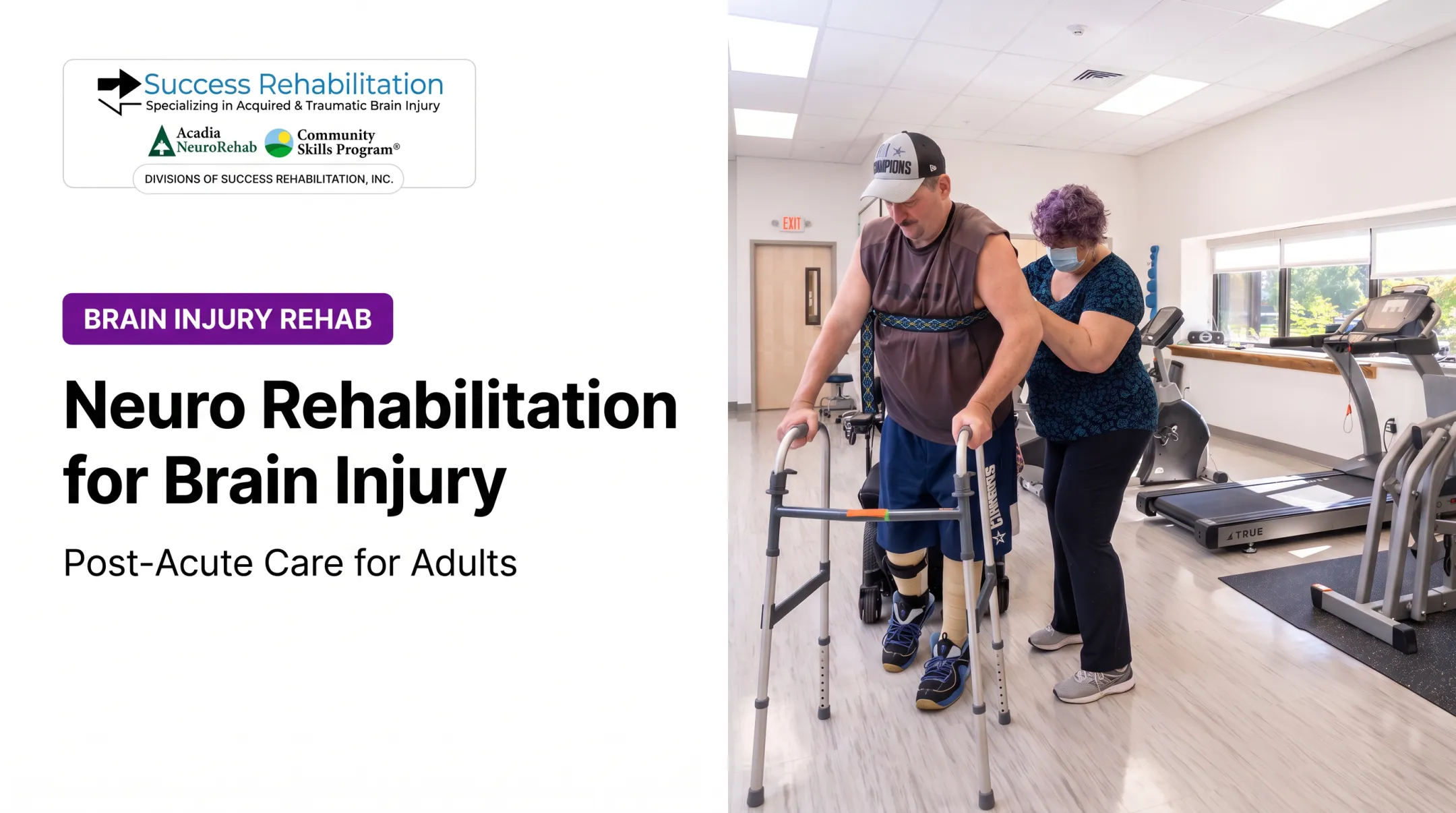
Physical therapy targets strength, coordination, balance, mobility, endurance, and fall prevention. Therapists also teach safe use of walkers, braces, and other adaptive equipment.
Occupational therapy ties all of that to real life: dressing, bathing, cooking, medication routines, organization, and home safety. It also covers community navigation and, when appropriate, a gradual return to work or school. A therapist might teach one-handed cooking, set up memory aids, or propose a modified work schedule.
Cognitive and speech-language rehabilitation
Cognitive rehabilitation works on attention, memory, processing speed, planning, problem-solving, and self-monitoring. It relies heavily on external aids such as phone alarms, planners, and structured routines. The INCOG 2.0 guidelines recommend offering evidence-based cognitive rehabilitation after TBI, delivered by clinicians rather than consumer brain-training apps.
Speech-language therapy addresses speech, language, social communication, and cognitive-communication skills. It also evaluates and treats swallowing problems when they appear.
Vestibular, vision, psychological, and behavioral support
Vestibular therapy helps with dizziness and balance. The VA/DoD 2021 guideline suggests a trial of vestibular rehabilitation for persistent dizziness or imbalance, but discourages prolonged therapy without improvement. For vision therapy, that same guideline finds the evidence inconclusive. Ask clinicians what outcomes they expect and how they will measure progress.
Emotional and behavioral care belongs in the plan too:
- Neuropsychology testing of memory, concentration, and executive function
- Counseling for depression, anxiety, and adjustment, for survivors and families
- Behavioral support for irritability and impulsivity
- Medical review of sleep problems and their underlying causes
TBI Rehabilitation Settings, Intensity, and Recovery Timeline
Inpatient and residential rehabilitation
Inpatient rehabilitation suits people who need medical oversight, 24-hour nursing, and multiple therapy sessions each day after acute hospital care. It also prepares them for the next living environment.
Other options include skilled nursing, residential brain injury programs, and other post-acute programs. No setting is best for everyone. Placement depends on:
- Medical complexity and nursing needs
- Cognition and behavior support
- Mobility and physical function
- Supervision level required
Outpatient, home-based, and community-based rehabilitation
Outpatient rehab fits people who are medically stable and can travel for scheduled, lower-intensity sessions. Home-based rehab helps when symptoms, mobility, transportation, or the environment make clinic visits hard.
Community-based services apply skills in the places people actually use them:
- Grocery stores and public transit
- Social outings and volunteering
- Work, school, and independent living
How long rehabilitation may last
No one can promise a standard recovery period. Duration and intensity depend on:
- Injury severity and complications
- Prior health and baseline function
- Progress against goals
- Family and caregiver support
- Payer or program requirements
One retrospective cohort found lower admission function scores predicted longer inpatient stays, though individual courses varied. Five-year MSKTC outcome data on people who needed inpatient rehabilitation show that some keep improving while others live with lasting limits.
A typical course moves from evaluation to active skill-building, caregiver training, reassessment, and transition planning. Some people then need long-term management.

How Progress Is Measured and How Families Can Support Recovery
Setting practical rehabilitation goals
Good goals describe function, not just scan results: finishing a morning routine, walking safely, remembering appointments, communicating needs, managing frustration, or returning to a valued activity.
Clinicians usually:
- Establish a baseline
- Break big goals into achievable steps
- Document changes
- Revise the plan when progress stalls or needs change

Formal tools such as the Functional Independence Measure, Disability Rating Scale, and Glasgow Outcome Scale-Extended help track change over time.
Activities that reinforce rehabilitation
Examples for adults include:
- Supervised walking
- Simple meal preparation
- Calendar and planning tasks
- Conversation practice
- Hobbies, games, and music
Every activity should match the person's abilities and therapist guidance.
Pacing matters:
- Stop before exhaustion
- Build in rest breaks
- Reduce distractions
- Keep routines predictable
- Keep regular sleep and wake times
Modify or end an activity if symptoms, fatigue, confusion, or overstimulation increase.
Family and caregiver involvement
Practical habits help at home:
- Use clear, simple language
- Allow extra processing time
- Give one instruction at a time
- Keep routines consistent
- Write down changes to share with the team
- Ask therapists how to carry skills over at home
Caregivers need care too. Stress can show up as pain, poor sleep, and trouble concentrating.
- Share responsibilities
- Find peer or professional support
- Protect your own sleep and medical appointments
- Ask the team how to respond safely to behavior changes or distress
Discharge planning should cover:
- Home safety
- Medications and appointments
- Transportation and equipment
- Follow-up providers
- Emergency contacts
- A plan for re-evaluation if function declines
How to Choose a Traumatic Brain Injury Rehabilitation Provider
Questions to ask during the evaluation
Compare more than one program. Ask about:
- Experience with TBI and the disciplines on staff
- How specialists coordinate and how goals are set
- How family members take part
- How progress and outcomes are documented
- Whether the program holds CARF accreditation specifically as a Brain Injury Specialty Program
- Which settings, including home and community care, are offered
- How behavioral and medical needs are managed
- What transition support exists
- How referrals, insurance authorizations, and transportation are handled
Get a written statement of covered services and your financial responsibility before care starts. Funding sources vary: private insurance, auto insurance, workers' compensation, and state programs.
Success Rehabilitation's continuum of care
Success Rehabilitation is a post-acute brain injury provider with 35 years of experience. Its continuum includes:
- Residential, outpatient, and neurocognitive day programs
- Home-based and community-based care
- Physical, occupational, speech, cognitive, and behavioral specialists, plus vocational support

Residential and outpatient programs operate in Pennsylvania. Home and community services extend to New Jersey.
Its mission is to help clients reach a realistic, maximum level of independence in the least restrictive community setting, with support for caregivers. That focus matches the evaluation criteria above.
Eligibility and funding vary by program, so no single option fits everyone. Referral sources and families can contact the Success Rehabilitation team to discuss which services apply.
Frequently Asked Questions
How long is rehab after a brain injury?
It varies with injury severity, symptoms, medical needs, progress, goals, support, and setting. A qualified rehabilitation team should give an individualized estimate and revisit it regularly.
What is brain rehabilitation?
It is coordinated therapy and support that restores function, builds compensatory strategies, improves safety, and increases participation in daily life after brain injury.
Do you ever fully recover from a traumatic brain injury?
Outcomes range widely. Some people recover fully or nearly so, while others have lasting effects. Continued rehabilitation can still bring meaningful functional gains.
What are some good TBI activities for adults?
Walking, structured planning, hobbies, conversation, games, and simple daily tasks work well. Keep them supervised and matched to therapist guidance.
How to help a person with a TBI?
Be patient, speak simply, keep routines predictable, and allow rest. Encourage them to follow the treatment plan, and look after your own well-being too.
What is the 3-hour rule for TBI?
Under 42 CFR 412.622, Medicare inpatient rehabilitation facility patients generally receive at least 3 hours of therapy a day, 5 days a week, or 15 hours a week in well-documented cases. It does not apply to outpatient, home, residential, or nursing facility care.
When to seek urgent care: Per CDC guidance, call 911 or go to an emergency department for worsening headache, repeated vomiting, seizures, slurred speech, weakness, increasing drowsiness, or inability to wake.