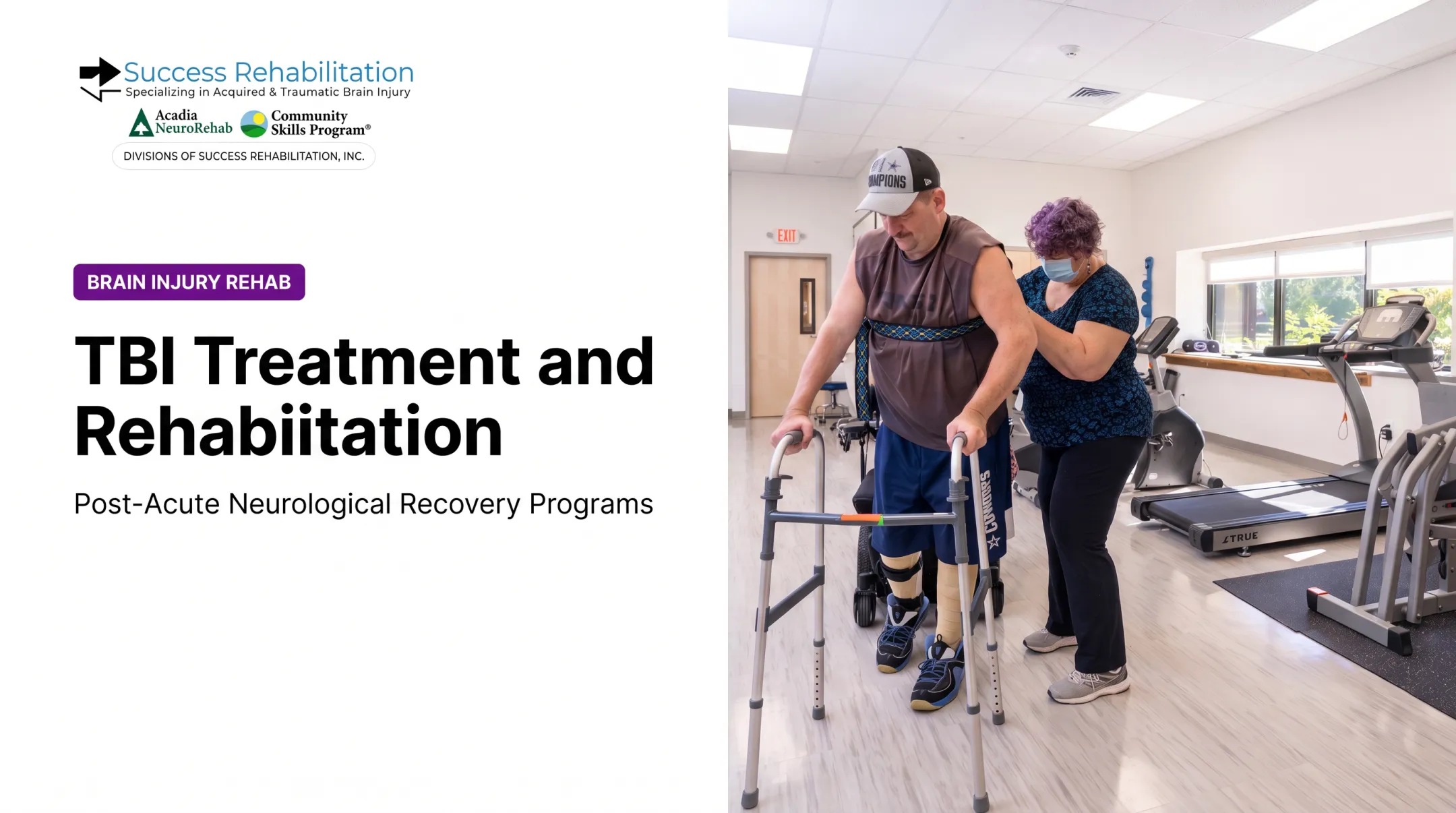
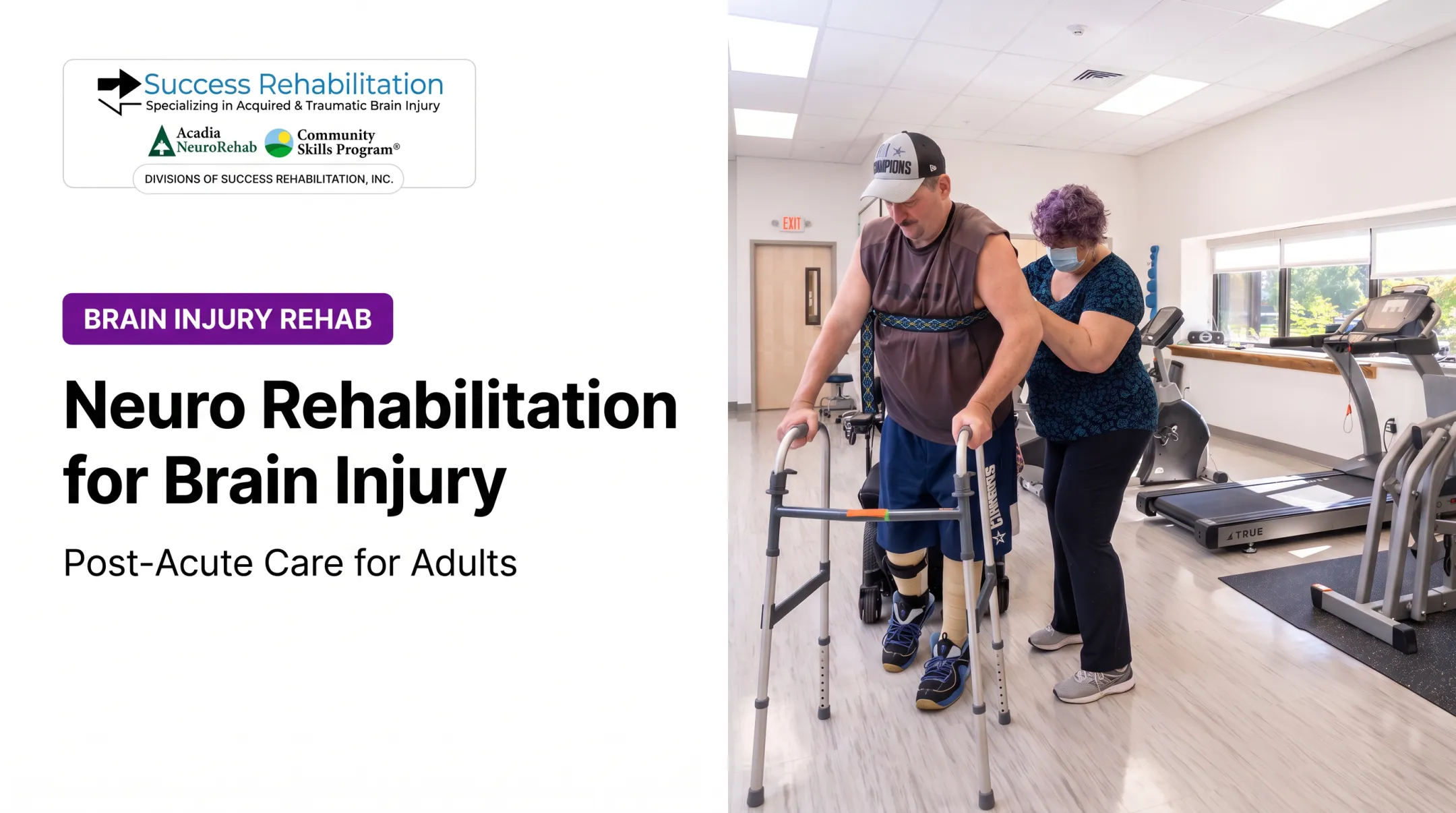
The CDC reports roughly 214,110 TBI-related hospitalizations in 2020, so the decision faces many families every year.
This guide explains rehabilitation goals, care settings, selection criteria, treatment expectations, and access. It does not name one "best" facility, because no such facility exists for everyone.
Key Takeaways
- Rehabilitation is individualized and draws on physical, occupational, speech, cognitive, behavioral, medical, and vocational support.
- The right setting depends on medical stability, supervision needs, goals, recovery stage, caregivers, and funding.
- Judge the whole care plan: measurable goals, staffing, caregiver education, and discharge planning.
- Verify services, licensure, payer participation, and availability directly with each provider.
What Is Brain Injury Rehabilitation?
Brain injury rehabilitation is coordinated post-acute care. It aims to improve function, compensate for impairments, manage symptoms, and support life at home, school, work, and in the community. Emergency and acute hospital care come first and focus on survival and stabilization.
Traumatic vs. Acquired Brain Injury
A traumatic brain injury (TBI) results from an external force, such as a car crash or fall. An acquired brain injury (ABI) is a broader category that includes nontraumatic causes like stroke, tumor, or seizure disorders. Diagnosis, severity, and recovery path must be evaluated by qualified clinicians.
What a Plan May Address
- Mobility, balance, and strength
- Communication, memory, attention, and executive function
- Emotional regulation, behavior, and safety awareness
- Self-care and community reintegration
The Team and How Progress Is Tracked
Teams often include physicians, nurses, physical and occupational therapists, speech-language pathologists, neuropsychologists, behavioral specialists, social workers, vocational professionals, and case managers. The NINDS describes treatment as individualized, so goals differ from patient to patient.
The team sets a baseline, agrees on person-centered goals, tracks functional progress, and revises the plan as needs change. Recovery can take months or years, and therapy often continues after the person goes home.

Types of Brain Injury Rehabilitation Hospitals and Centers
People often move between settings rather than finishing rehabilitation in one place.
| Setting | Role |
|---|---|
| Acute hospital / trauma center | Stabilization, neurological evaluation, surgery if needed, and deciding rehab readiness |
| Inpatient rehabilitation facility | Intensive, medically supervised therapy; Medicare generally expects about 3 hours a day, 5 days a week |
| Residential / post-acute program | Extended therapy, cognitive and behavioral programming, daily-living practice |
| Outpatient / neurocognitive center | Scheduled therapy while living at home |
| Home, community, and vocational | Real-world practice with routines, transportation, work, and social life |
Residential and Outpatient Programs
Residential programs suit people who need longer support and a structured step toward independence. Outpatient and neurocognitive centers fit people living at home with persistent attention, memory, executive-function, communication, or post-concussion problems.
Home, Community, and Vocational Care
These services help people practice skills where they use them: riding public transit, managing a household, or performing workplace tasks. Caregivers often take part in the transition. Pennsylvania's OVR and New Jersey's DVRS offer employment counseling, training, and placement for eligible people.
How to Choose a Brain Injury Rehabilitation Center
Start with fit, then look at how the program operates.
- Clinical and functional fit. Ask whether the program treats this injury type, medical needs, cognitive or behavioral challenges, mobility level, communication needs, and supervision requirements. The BIAA notes the nearest program, or the one with the most services, is not automatically the best match.
- Care team and scope. Ask which disciplines are on staff, how often they join treatment planning, and how nursing and behavioral needs are handled.
- Progress measurement. Request examples of individualized goals, functional assessments, family updates, and plans for plateaus.
- Caregiver involvement. Ask how families are trained, how home barriers are assessed, and how the program prepares for work, education, or daily activities.

Also keep credentials separate. These checks are different things, and a provider can hold one without the others:
- Trauma-center verification
- CARF accreditation
- State licensing
- Payer approval
Ask for each in writing.
An Example for Pennsylvania and New Jersey
Success Rehabilitation is one post-acute example. It is not an acute-care hospital. It offers a continuum of residential, outpatient, neurocognitive day, home-based, and community-based services for adults 18 and older.
Residential and outpatient programs operate in Pennsylvania (Bethlehem, Dublin, Quakertown, and Lancaster). In New Jersey, it offers home- and community-based services only, through its Community Skills Program.
Admission requires medical stability, funding, and willingness to participate. Confirm current availability and credentials directly.
What to Expect During Brain Injury Rehabilitation
Intake
Intake usually reviews:
- Medical records plus neurological and functional history
- Medications, safety needs, and cognitive or behavioral concerns
- Caregiver capacity and the person's own priorities
Programs may use tools such as the Functional Independence Measure (FIM) or the Mayo-Portland Adaptability Inventory-4, which tracks ability, adjustment, and participation.
Treatment
Therapy pairs structured sessions with repeated practice of real-life tasks:
- Mobility and self-care
- Communication and memory strategies
- Emotional and behavioral regulation
- Fatigue management and safety
Guidelines such as INCOG 2.0 support individualized, functional memory strategies and external aids for severe memory impairment.
Changing Plans
The plan shifts as abilities improve or new barriers appear. The MSKTC describes team meetings at least weekly that cover home services, transportation, community therapy, insurance, and support needs.
Family education, discharge planning, and referrals to community or vocational services keep care continuous.
Seek emergency care for worsening headache, repeated vomiting, weakness or numbness, seizures, slurred speech, unusual behavior, or inability to wake. Do not wait for a rehabilitation appointment.
Paying for and Accessing Care
Common Access Steps
- Get a referral if the insurer or program requires one.
- Gather hospital discharge summaries and therapy records.
- Identify the person's current level of care and recovery goals.
- Ask programs about assessments, wait times, transportation, admission criteria, and bed or appointment availability.
Coverage Varies
Benefits depend on the plan. Confirm prior authorization, medical-necessity documentation, copays, in-network status, and limits with the insurer. Prior authorization does not guarantee payment. Other funding routes follow their own rules:
- Medicare Part A covers eligible, medically necessary inpatient rehabilitation
- Workers' compensation may require designated providers
- VA care and Community Care need separate approval
- State programs such as Pennsylvania's Head Injury Program, Community HealthChoices, and the New Jersey TBI Fund apply their own criteria
Questions to Ask
- What costs should we expect, and which services are covered?
- What are the caregiver's responsibilities?
- Who arranges transportation and equipment?
- How is transition planned?
- What happens if a different level of care is needed?
Ask these of the discharge planner, insurer, case manager, and the rehabilitation center.
Frequently Asked Questions
What is brain injury rehabilitation?
It is coordinated therapy and support after a traumatic or acquired brain injury. Goals may include better function, safety, independence, symptom management, and community participation.
How long is neuro rehabilitation?
Duration varies with injury severity, medical stability, progress, goals, support needs, and setting. No fixed timeline applies, and people may move between levels of care over months or years.
What is the best hospital for brain injury?
No hospital or center is best for everyone. Compare specialized staffing, medical supervision, therapies, measurable goals, family support, location, access, and coverage.
What are the effects of brain damage on human behavior?
Possible changes include impulsivity, low motivation, mood shifts, frustration, poor judgment, and difficulty with social communication. Effects vary, so qualified professionals should assess them.
How do I choose a brain injury rehabilitation center?
Assess clinical fit, multidisciplinary services, staffing, individualized goals, caregiver involvement, progress tracking, and transition planning. Then verify licensing, payer requirements, and current availability.