Symptoms can also arrive late. Headache, dizziness, memory problems, trouble concentrating, mood changes, and poor sleep may surface hours or days later, often when the rider returns to work or ordinary routines. Familiar tasks suddenly feel harder.
This article covers emergency warning signs, medical evaluation, treatment, rehabilitation, recovery expectations, and practical support for families and caregivers. It is educational and does not replace urgent medical care. If you suspect a serious head injury, call 911.
Key Takeaways
- A head injury can come from a direct blow, a sudden jolt, or rapid deceleration.
- Seek emergency care for worsening headache, repeated vomiting, seizure, slurred speech, or difficulty waking.
- Neither a normal first CT scan nor the absence of a blackout rules out concussion.
- Recovery depends on severity, health, treatment access, and support.
- Rehabilitation can target mobility, cognition, communication, mood, and work skills.
How Motorcycle Accidents Can Cause Head Injuries
The CDC describes TBI as an injury that affects how the brain works, caused by a bump, blow, or jolt to the head or body. In a crash, that can happen in several ways:
- The rider is thrown and strikes pavement, a vehicle, or a fixed object.
- Rapid acceleration and sudden deceleration move the brain inside the skull.
- Blunt or penetrating trauma damages the skull and underlying tissue.
These crash forces show up in sobering national numbers. NHTSA reports 6,228 motorcyclists killed in 2024 and an estimated 86,887 injured. Those are national crash totals, not TBI diagnosis counts.
Many people with concussion never lose consciousness, and external signs such as bleeding may be absent, according to the AANS. That is one reason head injury severity is easy to underestimate after a crash.
Why a helmet reduces risk but does not eliminate it
A 2024 analysis of more than 315,000 injured riders in the National Trauma Data Bank found severe head trauma in 28.5% of unhelmeted riders versus 13.3% of helmeted riders.

A helmet is still not a guarantee. U.S. standards set impact-acceleration limits, yet laboratory studies have found that helmets handle straight-line force better than rotational force. Twisting motion can still move the brain. A properly fitted, approved helmet lowers risk; it does not promise a mild injury.
Why symptoms and severity can vary
Clinicians often grade severity with the Glasgow Coma Scale: mild is 13-15, moderate 9-12, and severe 3-8. Injury types differ too:
- Contusions: bruising and swelling from small-vessel bleeding
- Hematomas: bleeding from a ruptured vessel
- Diffuse axonal injury: widespread damage to the brain's connecting fibers
- Skull fractures: breaks that can injure underlying structures
Only qualified clinicians can diagnose type and severity.
Symptoms and Emergency Warning Signs
Symptoms fall into categories: physical, cognitive, sensory, emotional, behavioral, and sleep-related. They may appear right away or only once the person resumes normal activity. They can also change during recovery.
Physical and sensory symptoms to monitor
- Headache, dizziness, balance problems
- Nausea or vomiting, fatigue
- Blurred vision, light or noise sensitivity
- Ringing in the ears, changes in smell or taste
- Sleeping more, less, or with difficulty
Report anything persistent, worsening, or disruptive to a healthcare professional.
Cognitive and communication changes
Someone can look physically fine while struggling inside. Watch for:
- Memory gaps or slowed thinking
- Poor concentration or trouble finding words
- Confusion or difficulty following instructions
- Trouble finishing familiar tasks
Emotional and behavioral changes
These shifts are easy to miss or misread:
- Irritability, anxiety, or depression
- Impulsivity or unusual anger
- Withdrawal or personality changes
Caregivers should document them and tell the treating team. Don't write them off as stress.
Emergency signs that require immediate attention
Call 911 or go to an emergency department for any of these:
- Headache that keeps getting worse
- Repeated vomiting
- Seizure or convulsions
- Increasing confusion, agitation, or restlessness
- Inability to wake up
- New weakness or numbness, or loss of coordination
- Slurred speech
- Unequal pupils
- Clear fluid or blood from the nose or ears

How to track and communicate symptoms
Keep a simple log:
- When symptoms began and what makes them worse
- How often they occur
- Medications taken
- Sleep changes
- Effects on work and daily activities
The CDC also suggests telling a family member or friend, since they may notice changes the injured person misses. That matters most when memory or insight is affected.
Diagnosis and Early Medical Care
Get evaluated after any crash with a head impact, even if you can walk and talk. Tell clinicians about any head strike, amnesia, loss of consciousness, anticoagulant use, or new symptoms.
What a clinical evaluation may include
Clinicians typically review the crash mechanism, changes in consciousness and memory, symptoms, and medications. They check neurological function, balance, vision, speech, and behavior. Findings guide monitoring and follow-up.
CT scans, MRI, and the limits of imaging
CT can reveal bleeding, skull fractures, and other urgent structural problems. Some concussions and diffuse injuries don't show on an initial scan.
CDC guidance advises against routine CT or MRI for every patient. Decision rules such as the Canadian CT Head Rule help determine when imaging is needed. Imaging is strongly considered for patients on anticoagulants or antiplatelet drugs other than aspirin.
A clear scan is one data point. It must be read alongside the clinical exam.
When symptoms continue after the emergency visit
Follow up with a primary care clinician within a few days. Persistent headaches, dizziness, cognitive changes, or mood symptoms may call for a neurologist or concussion specialist. Symptoms lasting weeks or longer may signal post-concussion syndrome.
Acute treatment and monitoring
Depending on the injury, care may involve observation, symptom management, seizure treatment, surgery, or intensive monitoring. In severe TBI, priorities include stabilizing breathing and blood pressure and preventing further brain damage. Surgery may relieve pressure or remove hematomas.

Transition from acute care to rehabilitation
Discharge planning should cover:
- Supervision and medication management
- Mobility, communication, and cognitive needs
- Home safety and follow-up appointments
- Caregiver training
- Appropriate next rehabilitation setting
Rehabilitation and Recovery After a Motorcycle-Related Brain Injury
After a motorcycle-related brain injury, rehabilitation restores skills where possible and builds safe strategies for tasks that stay difficult. Recovery is often gradual and uneven. The CDC notes outcomes depend on pre-injury health, injury type and severity, access to specialized care, and family and social support.
How rehabilitation addresses physical and mobility problems
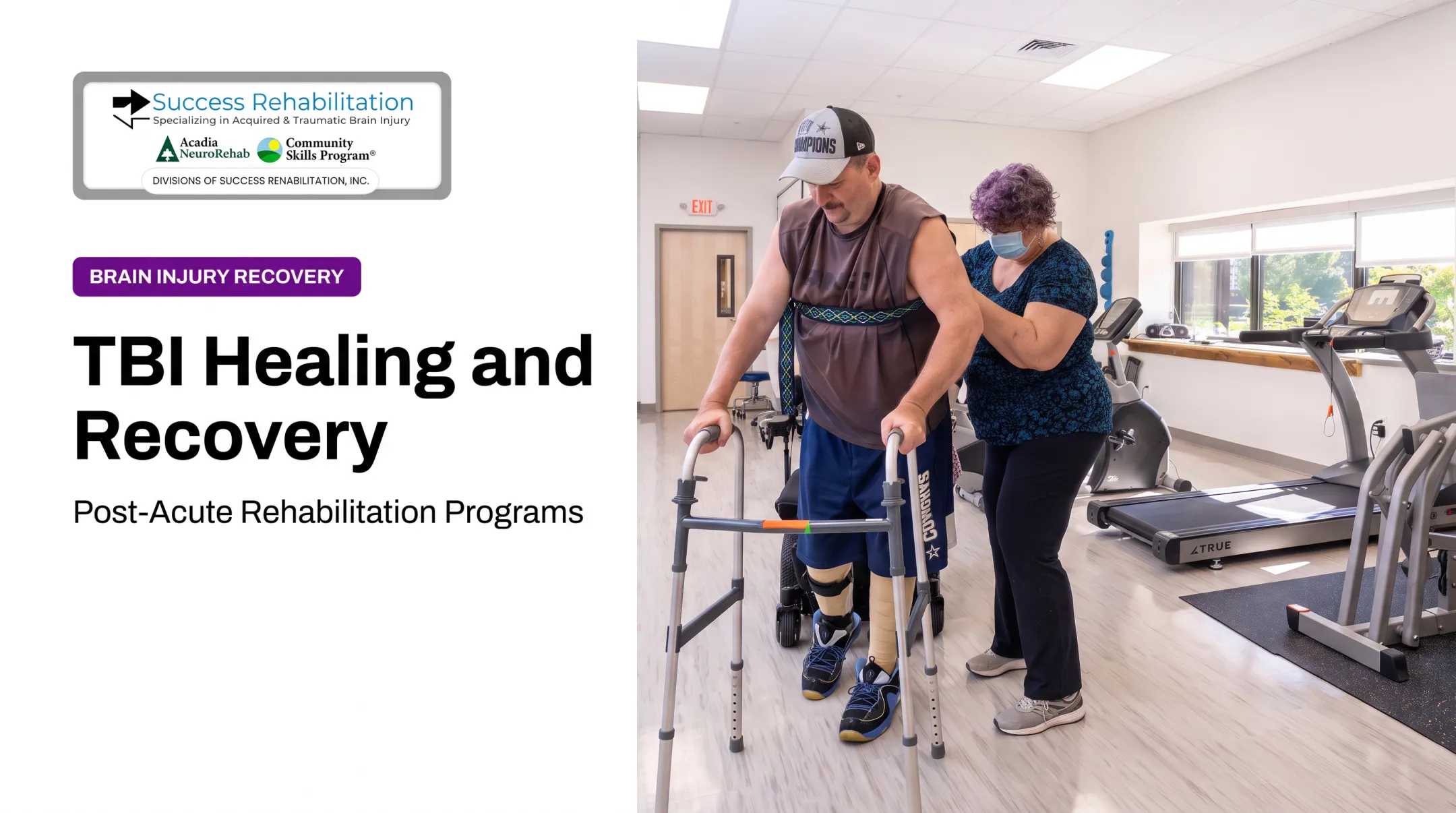
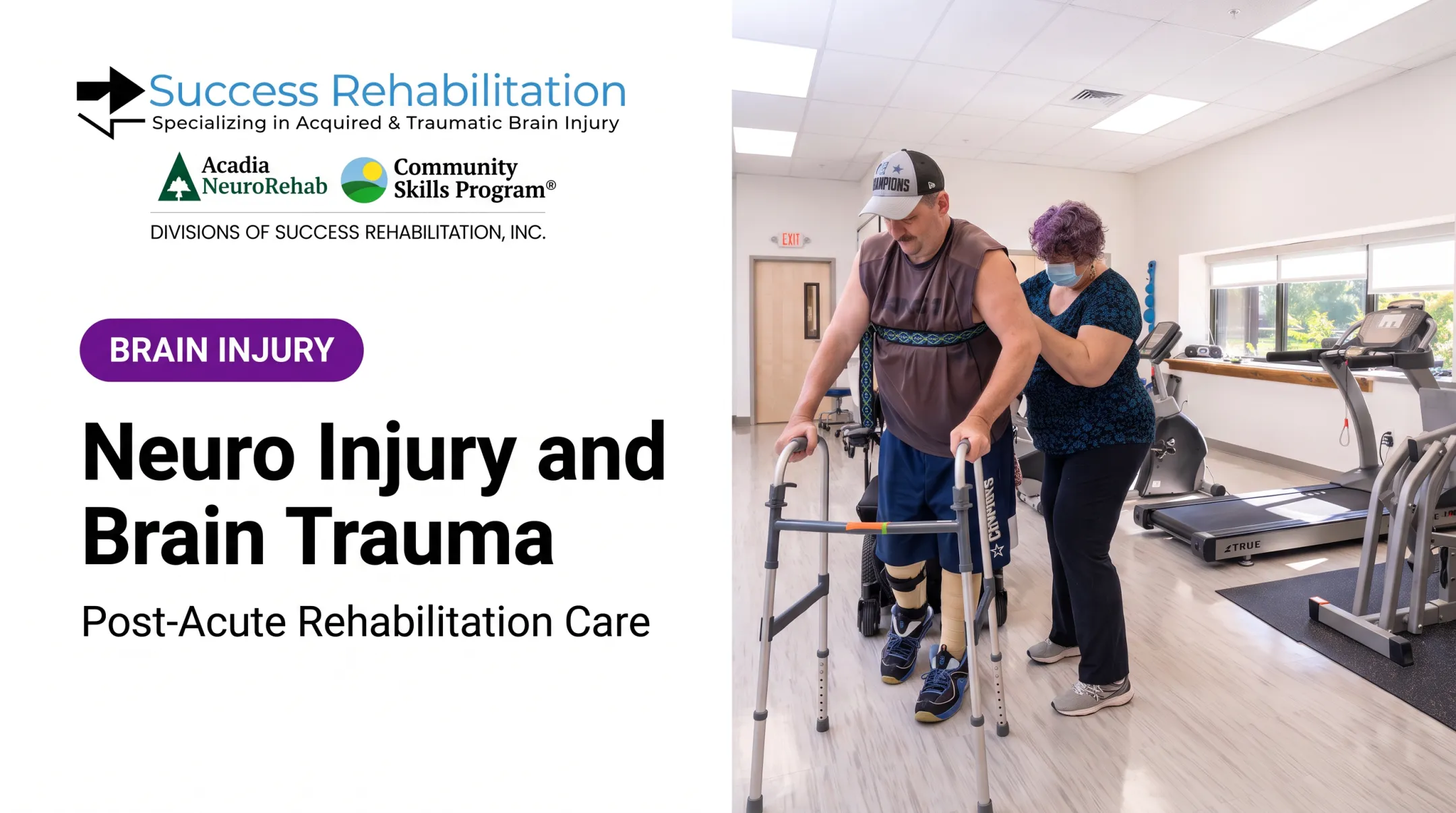
Physical therapy targets strength, balance, coordination, endurance, gait, transfers, and safe mobility. Walking goals come from an individualized assessment and medical clearance. A 2012 systematic review found limited evidence for any single superior gait intervention, so plans should be tailored, not assumed.
Cognitive, speech, and occupational rehabilitation
- Occupational therapy: self-care, routines, planning, visual or sensory challenges, home safety
- Speech-language therapy: speech, language, swallowing, memory, attention, problem-solving
- Cognitive rehabilitation: compensatory strategies for daily life
Emotional, behavioral, vocational, and community goals
- Behavioral health: emotional regulation, mood, and relationships
- Vocational services: work readiness, return-to-work planning, and fatigue management
- Community participation: daily life and social roles beyond the clinic
Choosing a rehabilitation setting and level of support
| Setting | Typically fits |
|---|---|
| Residential | Those needing 24-hour supervision and a full therapy team |
| Outpatient | Medically stable people who can live at home and travel to therapy |
| Home-based | Those who benefit from practicing skills in their own environment |
| Community-based | Those working on transportation, work, and daily participation |

The right choice depends on medical stability, supervision needs, mobility, cognition, caregiver capacity, and personal goals.
Success Rehabilitation's role
Success Rehabilitation is a specialized post-acute concussion and TBI rehabilitation provider with 35 years of experience. Its continuum includes residential, outpatient, neurocognitive day, home-based, and community-based services across Pennsylvania and New Jersey (New Jersey services are home- and community-based only).

Care is individualized and multidisciplinary, with physical, occupational, speech, behavioral, and cognitive specialists. The focus is measurable progress and greater independence. No provider can promise a specific outcome.
Recovery milestones and long-term management
Progress may look like:
- Safer mobility
- Clearer communication
- More independence with daily activities
- Better symptom management
- Improved work or school participation
- Less caregiver burden
Seek clinical review whenever symptoms or support needs change.
Supporting Someone After a Motorcycle-Related Brain Injury
Communication strategies for caregivers
The MSKTC recommends:
- Short sentences and simple words
- One thought or command at a time
- Extra time to respond
- Fewer distractions and one speaker at a time
- Confirmation of understanding
- No arguments over remembered events
Ask the treatment team for strategies tailored to the person's specific deficits.
Creating a predictable and safer daily routine
Build the day around clear structure:
- Consistent schedules
- Written reminders and a visible calendar
- Organized medications
- Planned rest periods
Reduce overstimulation and take fall-prevention steps. Match supervision to clinical needs. Ask clinicians before changing activity levels, and never resume driving or riding until a doctor approves.
Caregiver participation and care coordination
Caregivers can:
- Attend appointments and share baseline information
- Keep symptom and function notes
- Join therapy training
- Coordinate with discharge planners, case managers, employers, and rehabilitation providers
Caregivers need support and respite too. Fatigue, anxiety, and burnout are common among TBI caregivers. Family support groups can help.
Frequently Asked Questions
What is the average settlement for a traumatic brain injury?
There is no universal average. Outcomes depend on injury severity, treatment, functional impact, liability, insurance, and jurisdiction. A qualified personal injury attorney can give case-specific guidance.
How long does it take to recover from a severe traumatic brain injury?
It varies widely and can continue for months or years. Doctors may need weeks or months to understand the likely course. Complete recovery can't be promised, which is why individualized rehabilitation matters.
What are the physical effects of traumatic brain injury?
Common effects include headaches, dizziness, balance and coordination problems, weakness, fatigue, vision changes, seizures, and sleep disruption. A professional evaluation is needed to determine severity.
Do people with TBI go back to normal?
Some recover substantially; others have lasting cognitive, physical, emotional, or behavioral changes. Rehabilitation restores skills and builds strategies for independence, but it does not guarantee a return to baseline.
How can I learn to walk again after a brain injury?
A physical therapist and medical team assess strength, balance, coordination, safety, and assistive-device needs. They then build a progressive mobility plan with caregiver training and precautions.
How can I effectively communicate with someone who has a brain injury?
Use simple language, one idea at a time, extra response time, and fewer distractions. Confirm understanding, and work with speech-language or cognitive rehabilitation professionals.