Families often face this after a traumatic brain injury (TBI), stroke, or another neurological event, usually with few clear answers. Recovery varies a great deal from person to person.
This article covers how frontal lobe damage is evaluated, which treatments may help, what recovery can involve, and how caregivers can support progress. It is educational and not a substitute for medical advice.
Key Takeaways
- Symptoms depend on where the injury is and how far it extends.
- Treatment pairs cause-directed medical care with coordinated rehabilitation.
- No universal timeline or guaranteed cure exists, but practice and strategies can improve independence.
- New or worsening symptoms after a head injury or stroke need urgent evaluation.
What Frontal Lobe Damage Can Affect
What does the frontal lobe control?
The frontal lobe supports planning, organization, judgment, impulse control, problem-solving, working memory, attention, emotional regulation, speech production, and voluntary movement. StatPearls describes frontal lobe syndrome as changes in executive function, behavior, emotion, motivation, and personality.
The frontal lobe works within connected brain networks. Abnormal frontal test results can also come from damage elsewhere, so symptoms can't always be predicted from one spot or from the size of an injury on a scan.
Common cognitive, behavioral, physical, and communication effects
Effects tend to fall into practical groups:
- Behavior and personality: impulsivity, disinhibition, apathy, irritability, aggression, poor insight
- Thinking: trouble planning, memory and attention problems
- Communication: difficulty producing or understanding language
- Physical: weakness, coordination problems, trouble with daily activities
Symptoms can be subtle or disabling. A person may seem fine in a quiet clinic and struggle at home, at work, or in social settings.
Causes and why they matter for treatment
Possible causes include TBI, stroke, tumors, infection or inflammation, oxygen deprivation, and neurodegenerative conditions. The cause shapes urgency, treatment options, and prognosis. Stroke is an emergency, and suspected encephalitis needs immediate evaluation.
Behavior changes after a neurological event may look like a psychiatric disorder. Only a qualified clinician can tell the difference, so don't assume a diagnosis.
How Frontal Lobe Damage Is Evaluated and How Serious It Can Be
When symptoms require urgent evaluation
Seek emergency care for any of the following:
- A new head injury with a worsening headache, loss of consciousness, or unusual sleepiness
- Inability to wake, seizure, or sudden weakness
- Rapidly worsening confusion
- Sudden changes in speech or behavior
The CDC directs people with these danger signs to call 911 or go to an emergency department. Rehabilitation never replaces emergency treatment, surgery, or acute neurological care.
How clinicians assess frontal lobe damage
Assessment usually includes:
- Medical history and medication review
- Neurological and physical exams
- Cognitive screening and neuropsychological testing
- Speech and functional assessments
- Interviews with family or caregivers
CT or MRI can show bleeding, swelling, stroke, tumors, or atrophy. Imaging doesn't always predict day-to-day function, so it works alongside cognitive, language, and real-world task assessment.
Factors that influence severity and prognosis
Outcomes depend on:
- The cause and how quickly treatment began
- The affected region and hemisphere
- The extent of damage and involvement of other areas
- Age, overall health, and complications
Two people with similar-looking injuries can have very different symptoms and recoveries. Most outcome data comes from TBI and stroke generally, not frontal-only injuries.
Turning findings into rehabilitation goals
Clinicians set a functional baseline, then write measurable goals tied to daily life. Targets often include safety, attention, self-care, communication, behavior, mobility, and return to work, school, or community participation. Goals should stay individualized and attainable.

Teams revisit those goals as abilities, insight, motivation, and support needs shift during recovery.
Frontal Lobe Damage Treatment and Rehabilitation
Treating the underlying cause and medical complications
Acute care follows the cause. It may involve neurology, neurosurgery, stroke care, oncology, or infectious disease. The National Cancer Institute lists surveillance, surgery, radiation, chemotherapy, and targeted therapy as tumor options, chosen case by case.
Medications for seizures, mood, sleep, pain, or agitation must be chosen and monitored by clinicians. No medication is right for every person with frontal lobe damage.
Rehabilitation therapies
Therapy targets attention, memory strategies, planning, sequencing, problem-solving, self-monitoring, initiation, and awareness of deficits. It often combines restorative practice with compensatory tools:
- Written routines and checklists
- Alarms and visual cues
- Structured environments
- Step-by-step task breakdowns
Practice works best in the person's real living, work, or study setting, so skills carry over.
Physical, occupational, speech-language, and psychological care usually run alongside that cognitive work:
- Physical therapy for weakness, balance, coordination, walking, and endurance
- Occupational therapy for self-care, household tasks, medication routines, safety, adaptive equipment, and returning to meaningful activities
- Speech-language therapy for expressive or receptive language, cognitive-communication, attention, memory, planning, and swallowing when affected
- Psychology, counseling, and structured behavior plans for impulsivity, emotional regulation, aggression, apathy, grief, and social interaction

Caregiver guidance from MSKTC stresses identifying triggers and communicating clearly.
Coordinated rehabilitation settings and care planning
Outpatient, home-based, community-based, neurocognitive, vocational, or residential programs may fit, depending on medical stability, supervision needs, safety, family support, and goals.
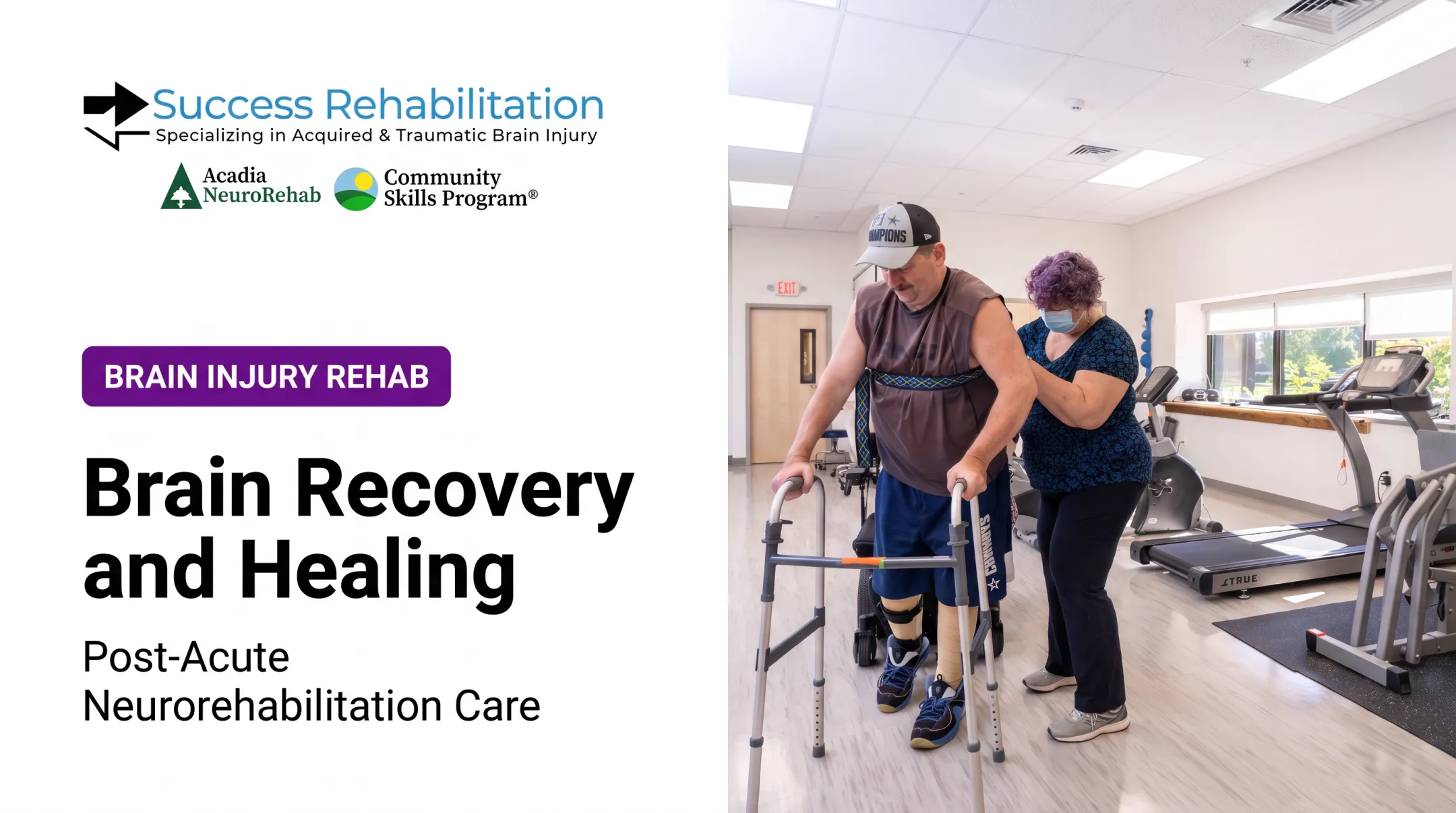
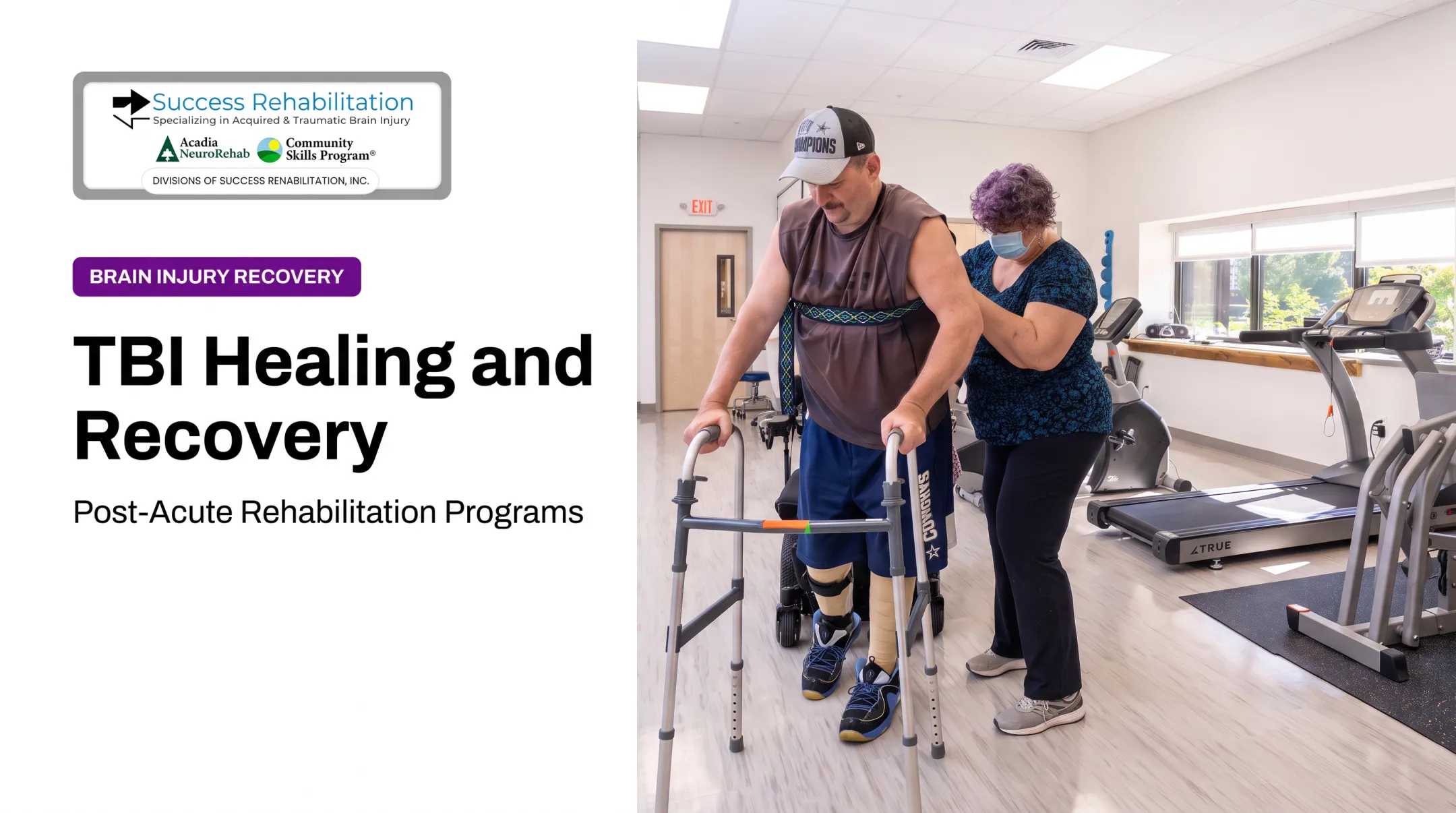
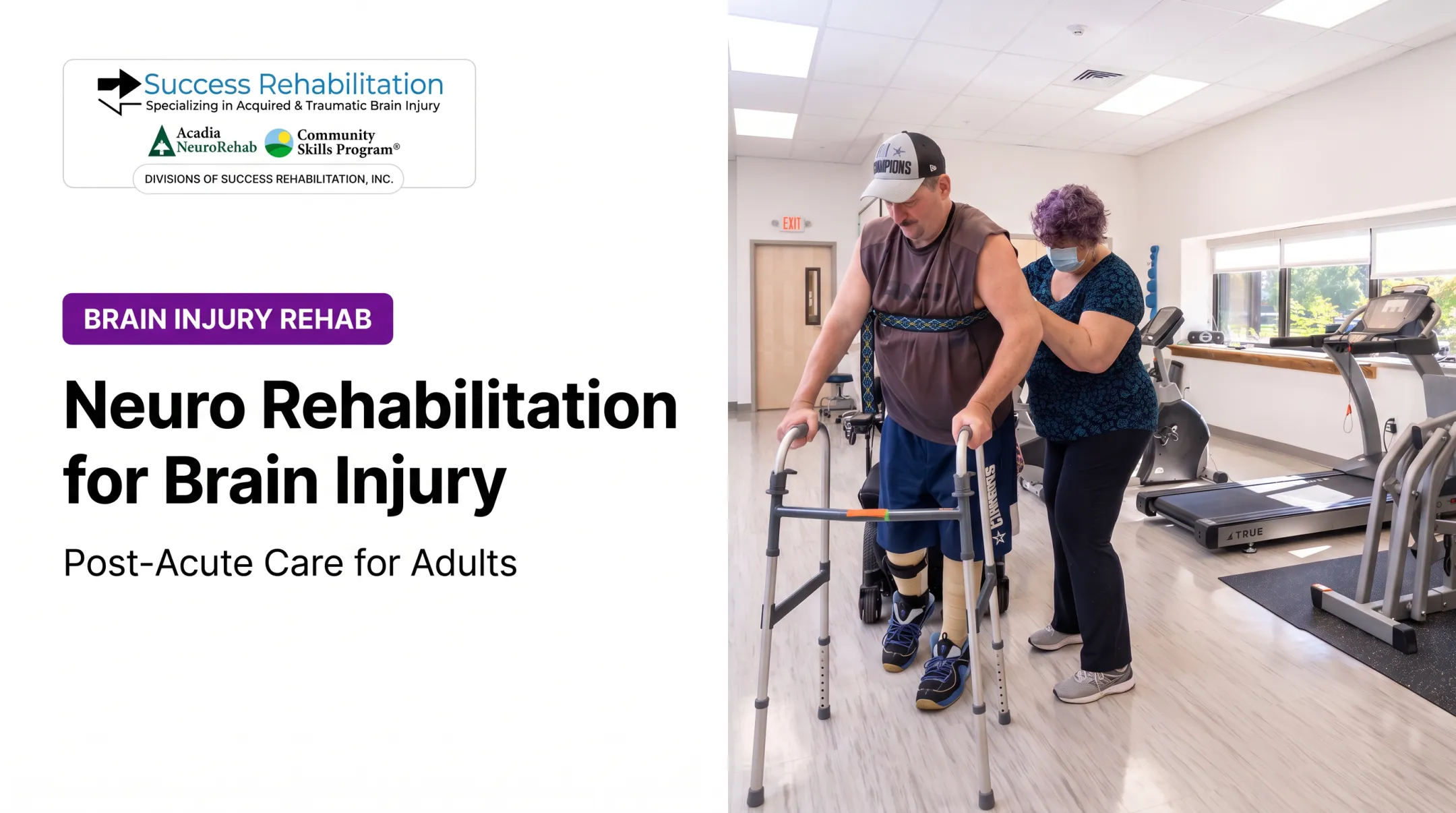
Success Rehabilitation provides coordinated post-acute concussion and TBI rehabilitation, with residential, outpatient, neurocognitive, home-based, and community-based services in Pennsylvania and New Jersey. Residential care is Pennsylvania only. Its team includes cognitive, physical, occupational, speech, and behavioral specialists. Eligibility and care needs are individual, and no outcome is guaranteed.
What Recovery May Look Like Over Time
Recovery timeline and factors that affect progress
There's no single timetable. Progress may be faster early, slower later, or uneven with fatigue, stress, illness, sleep, and mood. An MSKTC analysis of 4,624 people after inpatient TBI rehabilitation found wide variation over five years.

Recovery combines healing, neuroplastic adaptation, relearning, and compensatory strategies. It isn't a predictable return to the old baseline.
How rehabilitation supports rebuilding function
No exercise or supplement literally rebuilds the frontal lobe. Repeated, meaningful, appropriately challenging practice helps people find better ways to do affected tasks.
Supportive habits help too:
- Consistent sleep
- Physical activity once medically cleared
- Good nutrition
- Less alcohol and drug use
- Stress management and social connection
These habits complement, not replace, clinician-prescribed rehabilitation.
Measuring meaningful improvement
Track practical gains:
- Completing routines and remembering appointments
- Managing emotions and communicating needs
- Avoiding unsafe decisions
- Navigating the community
- Finishing work or school tasks
- Needing less supervision
Success can mean using strategies well even when the impairment remains. Scans can't capture every functional change.
Family and caregiver support
What helps at home:
- Consistent routines and short instructions
- Written reminders
- Calm redirection and clear boundaries
- Fewer distractions
- A shared safety plan
Poor insight, impulsivity, aggression, and personality change are symptoms, not intentional misconduct. Seek professional help when behavior creates risk.
Long-term recovery, independence, and community reintegration
Some people need ongoing support after formal therapy ends, including outpatient, home-based, community, vocational, behavioral, or residential services.
Long-term plans should aim for realistic independence, productivity, relationships, and the least restrictive safe setting. Some people will need continuing supervision.
Frequently Asked Questions
How long does it take for frontal lobe damage to heal?
It varies by cause, severity, location, health, and participation in rehabilitation. Medical healing differs from longer-term functional recovery. Clinicians can give individualized guidance.
How do you rebuild the frontal lobe?
Damaged tissue can't necessarily be rebuilt by one treatment. Rehabilitation, repeated task practice, compensatory strategies, and healthy routines can support functional improvement.
Can frontal lobe damage be cured?
Some underlying causes are treatable or reversible. Many injuries can't be fully cured, so care focuses on managing symptoms, safety, adaptation, and independence.
How serious is frontal lobe damage?
It ranges from subtle executive difficulties to major behavioral, cognitive, communication, or motor impairment. Sudden or worsening symptoms need prompt medical assessment.
Can someone live independently after frontal lobe damage?
It depends on impairments, insight, safety, supervision needs, and progress. Adaptive strategies and community supports can make greater independence possible.
What should caregivers do about impulsive or aggressive behavior?
Seek professional assessment, keep routines predictable, set calm boundaries, make the environment safe, and use a behavior plan. If anyone is at immediate risk, get urgent help.